Lankes, R. David (2021). Forged in War: How a century of war created today’s information society. New York, NY: Rowman & Littlefield.
Forged in War: How a Century of War Created Today’s Information Society
I am proud to announce my new book Forged in War: How a Century of War Created Today’s Information Society published by Rowman & Littlefield.
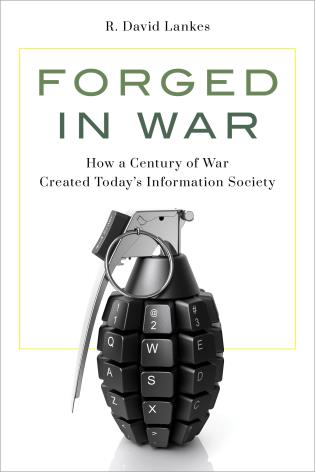
Many of what we think of as Information Age tools and media— computers, cell phones, the internet, encryption, and more— evolved directly out of modern warfare. These tools started with World War I (which began not with arms but with England cutting off underwater cables to Germany to isolate it), accelerated through World War II and the Cold War, and now play a central role in both declared and non-declared conflicts like election interference and cyberbattles.
We buy phones, smart speakers, and virtual assistants like Siri and Alexa to help us do our work and answer that one trivia question that bugs us. Yet these devices are data gatherers. They collect, repackage, and monetize our questions, purchases, photographs, and web surfing to form a data industry now larger than the oil industry.
Forged in War takes a critical look at the systems we use and how we ended up in a society that increasingly values data over personal liberty and commerce over the public good. It tells a compelling and previously untold story of how our ideas of information and knowledge reflect the century of war that has militarized our worldview.
R. David Lankes’s work has been funded by organizations such as the MacArthur Foundation, the Institute for Library and Museum Services, NASA, the U.S. Department of Education, the U.S. Department of Defense, the National Science Foundation, and the U.S. State Department. This, his latest book, will help all of us learn how war has shaped our world and how to begin to create an agenda to stand down weaponized data and a media that seeks to own our personal, even intimate, data like one owns a gold mine.
Check out the star review in LibraryJournal: “VERDICT This most recent book by Lankes is ideal for readers seeking a more comprehensive look at information dissemination technology, its context, and its impact on the way in which we now live.“
Available to order from Rowman & Littlefield
SPECIAL OFFER
30% DISCOUNT OFF LIST PRICE USING CODE RLFANDF30
978-1-5381-4895-2 • Cloth May 2021 • $36.00 • after discount: $25.20
978-1-5381-4896-9 • eBook May 2021 • $34.00 • after discount: $23.80
Ampliemos expectativas – Expect More in Spanish Free Online
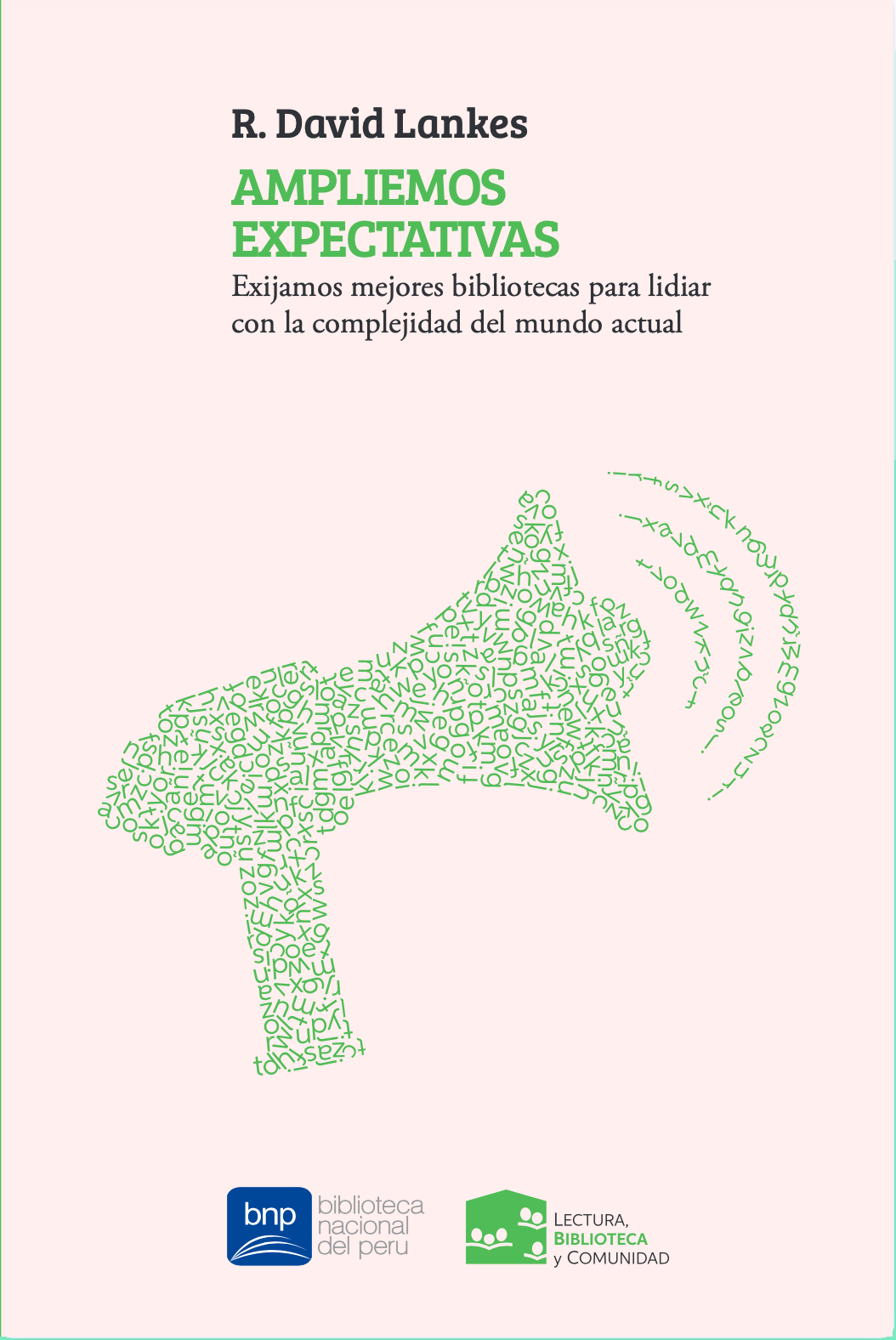
On Tuesday I had the honor of joining a launch event with the National Library of Peru. The library, working with the Library of Valencia, have translated Expect more into Spanish. It is a part of the National Library of Peru’s Reading, Library and Community Book seriesBest yet, they have released it to the world!
You can link to the Spanish eBook here: https://bpdigital.bnp.gob.pe/info/ampliemos-expectativas-exijamos-mejores-bibliotecas-para-lidiar-con-la-complejidad-del-mundo-actual-00638600
Here are my remarks for the release:
I am so happy to join you today for the launch of Expect more as part of the “Reading, Library and Community” Book series. I want to thank the National Library of Peru and the librarians of Valencia for their work translating and publishing the Spanish language version.
Continue reading “Ampliemos expectativas – Expect More in Spanish Free Online”Libraries Leading the New Normal
“Libraries Leading the New Normal.” Computers in Libraries 2021. Online.
Abstract: Insurrection, pandemic, racial awakening, climate crisis, a looming wealth gap. Libraries of all types are functioning in a time unlike any in history. What role can librarians play in times such as these? The answer must be to rebuild trust and reaffirm the foundations of our very democratic ideals one community at a time. Librarians must join with those we serve in forging a new normal that embraces diversity over division, collaboration over ideology, and seeks a unified equitable future. Doing so requires us to build a pragmatic agenda for a new normal based on a foundation beyond collections and access.
Slides: Slides in PDF
Bibliotecários construindo o novo normal
Lankes, R. David (2021). Bibliotecários construindo o novo normal. Revista Brasileira de Biblioteconomia e Documentação Vol. 17
Librarians Building the New Normal
“Librarians Building the New Normal.” Brazilian Federation of Associations of Librarians, Information Scientists and Institutions Keynote. Via Video
Speech Text: Read Speaker Script or in Portuguese
Abstract: If librarians wish a better world, they have to make it better, not wait for it to happen.
Alternative Video: Use this link to watch the video with Portuguese captions plus listed the the questions and answers.
Audio:
Librarians Building the New Normal from R. David Lankes on Vimeo.
[This is the script I used for my talk typos and all.]
Greetings, and thank you for having me. I would like to thank Dr. Prado in particular, not only for the invitation, but also for being such a great collaborator over the years.
I see that the theme for today is “Libraries for a better world.” I have to tell you that after the past year, I could certainly use a better world right now. After this past year, a world without COVID would be nice. Without the isolation of the pandemic, without the loss, and the fear would be nice. A better world where public health is not intertwined with political ideologies. Where a mask is not a statement.
A better world where we don’t pit the economy against the environment and where the color of your skin or the place of your birth does not determine your future.
Continue reading “Librarians Building the New Normal”Lankes Awarded Isadore Gilbert Mudge Award
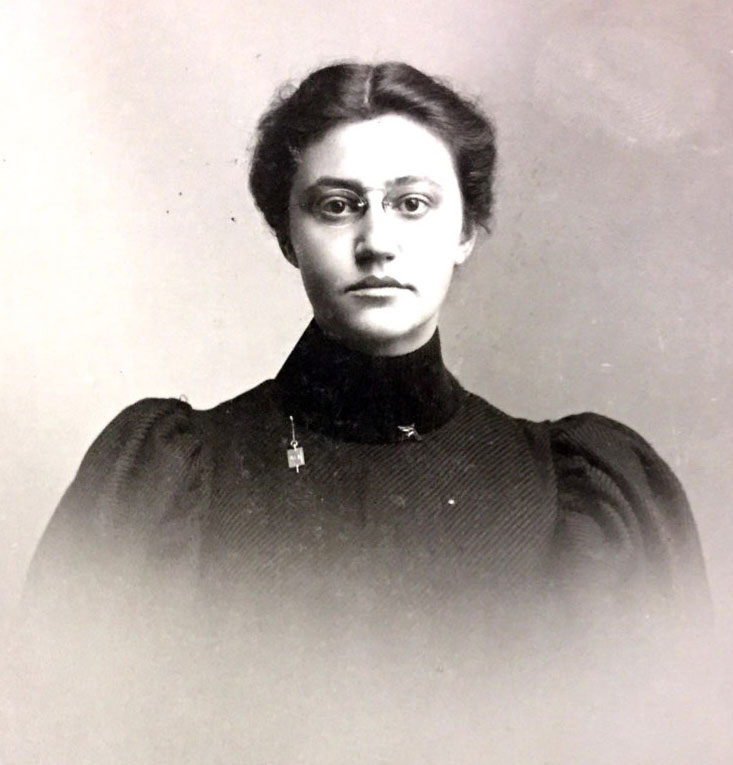
I am humbled to be “selected as the 2021 winner of the Isadore Gilbert Mudge Award, the Reference and User Services Association’s highest honor. In recognition of his 30 years of visionary leadership in reference services; for his national leadership in virtual reference; for his ongoing work in expanding reference services to build stronger communities; and for his excellence as an LIS scholar.” RUSA Website
I have to give great thanks to the selection committee. I am also indebted to the incredible Joe Thompson (who should be the next winner) for nominating me.
I am proud to join a list of awardees with some of my reference heroes on it like Joe Janes, Marie Radford, Cheryl LaGuardia, Nancy Huling, David Tyckoson, Linda C. Smith, Joan C. Durrance, Anne Lipow, and William A. Katz.
Lankes Named Visiting Researcher at French National Library School ENSSIB
I am proud to announce that I have been appointed as a Visiting Researcher to ENSSIB (École Nationale Supérieure des Sciences de l’Information et des Bibliothèques), the national library school in France. Previous Visitors include: Marie Martel, professeur et bibliothécaire à l’université de Montréal and Michael Buckland, Professor Emeritus at the University of California Berkeley’s School of Information.
This year I’ll be working virtually with faculty and students to organize some master classes on the topic of post-neutrality librarianship and some other projects. Thanks to ENSSIB director Nathalie Marcerou-Ramel and to Raphaëlle Bats for this amazing opportunity. I can only hope enough folks get vaccinated for me to actually travel to Lyon in the fall.
To prevent confusion, this is in addition to my current position as professor and director of the iSchool at the University of South Carolina.
What is a Librarian
“What is a Librarian?” Newcomer Project Meeting. Video Conference for the Erasmus+ NEWCOMER Project.
Abstract: What skills are needed by a librarian is set by how you define a librarian.
How Libraries Can Help Us Make a More Perfect Union – The Long Version
On January 22nd Publisher’s Weekly published on OpEd of mine in their Soapbox. It was based on a longer piece I wrote on Facebook. Here is the longer version.
On January 6th insurrectionists invade the Capital in Washington DC to attempt to subvert the will of the American people by attempting to overturn the presidential election. They did so after a morning, and indeed, months of instigation founded on misinformation, false grievance, and a climate that increasingly defines politics as a pursuit of power over the judicious use of power at the behest of the people.
It has taken me several days to begin to make sense of this, to get over my anger, and to affirm for myself a way forward. For me, as an information scientist; as a director of an academic program that prepares librarians and information professionals; as an author and speaker, the way forward is clear: we must rebuild the civic and educational structures that bring communities together.
This is not a shocking conclusion. One could even rightly say it is a self-serving one. After all, as a scholar, educator, and author I am invested in the success of these institutions. However, I am invested because I continue to see their value and positive transformational potential.
I am invested because I have seen when libraries break out of the artificial bounds of collections and neutrality, they become instruments of community cohesion. I have seen libraries host difficult conversations on race. I have seen libraries bring together a people on issues of immigration. I have seen libraries fight for the poor, and the incarcerated, and the all too forgotten in attempts to remove the alien nature of neighbors. From drag queen story hours, to human libraries, to simply providing a collection that captures the value and richness of the human experience, our public libraries must continue to weave together a fragmented social fabric one person, one neighborhood, one nation at a time.
I am invested because I have not only seen for myself, but read study after study on the power school librarians in the education of our youth. I have seen dedicated educators in out school’s largest and most inclusive classrooms, school libraries, make a safe space for the marginalized. I have seen school librarians go beyond the limits of testing to engage children in true inquiry and spark the passion for learning. I have seen school libraries with books and makerspaces, and hydroponic gardens, and talent shows, and whole programs give students status and meaning in an education system all too often focused on outcomes and curricular standards. And I have seen school librarians from the cities and the states again and again and again sound the alarm that literacy in this era must be more than reading and arithmetic but understanding and the ability to interrogate messages and claims in the media, on the net, and in the very conversations we have as a nation. Alas, I have also too often seen these heroes and their programs cut based on the false premise that the only learning that occurs in a school is tied to a textbook.
I am invested because I have seen academic libraries and archivists not simply preserve our cultural heritage, but make it accessible and meaningful to their universities, and the world at large. I have seen stewards of the record of our history, with a degree, or without, force us all to honestly acknowledge a past of racism, bigotry, exclusion, and authoritarianism that does not simply inform our present, but is part of our present mechanisms of systemic racism and political ideologies. I have seen medical librarians ensure that today’s front-line health workers are prepared to face the savage reality of COVID and the savage reality of non-critical thinkers that dismiss science for adherence to political messaging. I have seen academic librarians dedicate themselves to prepare college students of this nation to do actual research, embracing Google and social media, but also the scholarly record, and the foment of investigation.
I am invested because I have seen the power of the information professional, the IT worker, the social media strategist, the data scientist when they are prepared with the ethical skills to complement their technical ones. I have seen the IT manager and the business process analysts ensure that we never see our fellow citizens as simply consumers or dopamine triggered users, but rather as human beings. Human beings that at their core seek safety and certainty and meaning in their lives – and when an unjust society deprives them of means of engaging in the democracy and the economy, they have no choice but to turn to demagogues who mask narcissism in patriotism, and self-interest in twisted visions of greatness.
The future of this nation is not the sole property of a political party. The future of this nation is in the capabilities and education of its citizens. Again and again and again we see that when “enemies” come together in honest and civil conversations – when they are exposed to “the other”- they find commonality. It is too easy to hate through a screen, particularly when the person on the other end may not be a person at all.
My own work seeks to better understand the role of librarians in society. As part of that I have come to the conclusion that there is no neutrality in the work of information. All views are not equal, all visions for the future are not the same nor must they presented in an unbiased or equal fashion. A vision of the future where elections are overturned by the group most willing to tear down social norms and resort to violence is not as valid as a future where righteous protest over inequity are protected. A future where profit drives national narratives and is preferred over community forums of civic engagement is not the right future. A future where libraries and schools are restricted to providing only a prepackaged version of “objective belief,” must be rejected. In its place we must all embrace and prepare for a complex world where human desire for meaning must temper a baser desire for power and exclusion.
I am invested in the success of libraries, and schools, and academia because I believe they are the essential social infrastructure to move us past the dark actions of January 6th. I ask that we all invest in them and ensure our voices are heard and our democracy strengthened. I am not asking us all to magically agree, but to agree that it is through debate and seeking fair and equitable mechanisms (elections, governance, education) that we will be great. And I am asking us all to acknowledge that we are not there yet. I am asking us to invest not in a person or a party, but in our neighbors whatever their color, or whoever they love, or however they identify themselves.
I also acknowledge that I am making this request from a place of privilege and economic stability. I am making this request on lands taken from indigenous people, and I am asking for peaceful revision to a system that all too often used violent means to suppress people of color.
This country was founded with the following words:
“We the People of the United States, in Order to form a more perfect Union, establish Justice, ensure domestic Tranquility, provide for the common defence, promote the general Welfare, and secure the Blessings of Liberty to ourselves and our Posterity, do ordain and establish this Constitution for the United States of America.”
These words were a mission, not a statement of fact. It was the starting point…we did not form a perfect Union, we formed a government to seek one out. We, as a nation, a colonizing power, a slave owning nation, an imperfect collection of very fallible human beings, put in writing not some statement of success, but of aspiration. An aspiration that we MUST continue today. WE ARE NOT A PERFECT UNION. We will never be a perfect union because the definition of such a thing will change with the advent of new understandings of physics that can enlighten or build bombs; with new medical capabilities that both save lives and bankrupt those unable to pay for them; with new understandings of sexuality and gender that can both liberate and evoke fearful condemnation; and, yes, with new technology that can connect mankind and allow the worst of our human nature to seek out its peers.
I am invested in seeking out a more perfect union, and believe such a pursuit begins with equitable education, information, and conversation.