I am so happy to announce a symposia series on New Librarianship.
Ten years ago MIT Press published The Atlas of New Librarianship. We are taking the opportunity of its 10th anniversary to explore some of the key issues in librarianship that have evolved and emerged since 2011 in a series of online symposia in October and November 2021. We would like to invite you to be a part.
The symposia series is sponsored by MIT Press, the University of South Carolina, the International Federation of Library Associations and Institutions, the British Library, KB National Library of the Netherlands, the U.S. Institute of Museum and Library Services, Gigabit Libraries Network, URFIST de Bordeaux, Enssib, and the Black Caucus of the American Library Association. We also expect more international organizations to join as sponsors shortly.
Call for Contributions
We seek abstract and creative format proposal submissions for ideas and approaches that can guide the field over the next decade and address the following areas:
- Equity, diversity, and inclusion
- Post-neutrality librarianship
- International influences
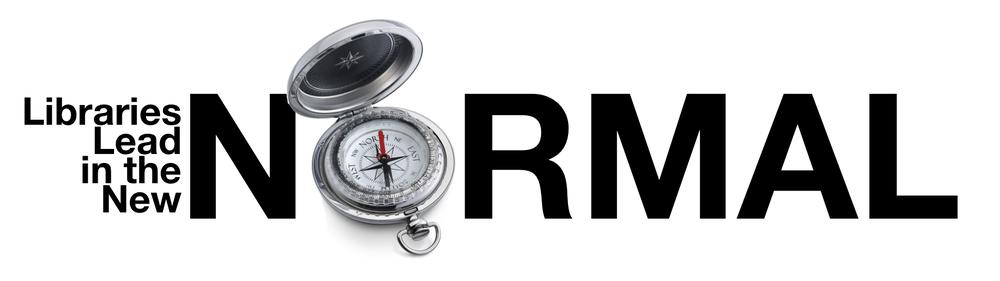
- A “new normal” agenda in a COVID-affected world
Symposia sessions will be streamed live, free of charge, and with efforts made to meet accessibility needs. Detailed descriptions for each topical area are below.
Accepted abstracts will be presented during a symposium and published on the University of South Carolina ScholarOne digital platform. Three abstracts for each symposium will be invited for development into white papers and awarded $2500 stipends. In addition, selected presentations will be developed into commissioned essays to be included in the Atlas of New Librarianship. Submissions from library practitioners and early career faculty are highly encouraged.
Each symposium will focus on concepts that guide library practice and development, rather than focusing on skills or specific functions tied to a given institution. Participants will be encouraged to seek broad concepts and theory that ultimately determine how librarianship is defined in and outside of the context of a library, as well as beyond sectors (public, academic, school, etc.). These symposia seek the ideas that will guide the field over the next decade instead of the latest trends or services.
Abstract submissions should address one of the four following core topics:
Symposium 1: Equity, Diversity, and Inclusion: The vital need for diversity in librarianship stems from twin beliefs in the inherent value and dignity of all people and in the fact that the best knowledge is derived from the richest variety of sources. How can this be expressed as a core value of librarianship and what are its implications for the institutions librarians build and maintain? How can we address institutional racism, biases, discrimination, and inaccessibility in library institutions, education, and practice internationally? How might we integrate principles of inclusion and universal design?
Symposium 2: Post-Neutrality Librarianship: Librarians cannot be unbiased neutral information professionals and passionate advocates for better communities. To seek an improved society calls for a vision of what “improved” means. How can librarians reconcile the reality of making service decisions in a context of limited resources with a mandate to serve the whole community?
Symposium 3: International Influences: Concepts of diversity, of service, and of librarianship itself are strongly influenced by local contexts. The idea that the work of librarians looks the same in Kenya, Norway, China, and the United States is founded on the strained concept that universal structures serve all. What in librarianship transcends national boundaries, what varies, and what is the process that connects the two?
Symposium 4: A New Normal Agenda in a COVID-Affected World: The COVID pandemic has put in sharp contrast the role of libraries in communities, and made clear how what was once considered normal, must never be normalized again. Librarians must fight for universal broadband, better workforce development, and expand democratic conversations, to ensure the wellbeing of communities and understand their roles in a crisis. What does the new normal agenda for librarianship look like?
Paper Abstract Submissions:
Abstracts for papers to be presented during a symposium should discuss, analyze, and critique critical ideas, theories, and concepts addressed within the chosen symposium topic. Submissions will be evaluated on quality of content; theoretical, conceptual, or practical significance; relevance for practice; originality; and clarity. The maximum length for an abstract, including references, is 500 words. Appendices should not be included. No author names should be listed in the abstract submitted for review.
Creative Format Contribution Proposals:
In addition to the call for paper abstracts, we invite multimedia contributions in visual, audio, audiovisual, or hybrid formats. Contributions should include a sample of work and a contributor statement and engage with critical ideas, theories, and concepts addressed within the chosen symposium topic. Submissions will be evaluated for quality of content; theoretical, conceptual, or practical significance; relevance for practice; and creativity.
Editorial Board Review: Submissions will be refereed by an editorial board assigned to each symposium area. Please see the “About” page for Editorial Board Member information.
Important Dates
- June 30, 2021: Abstract submissions due by 11:59 PM EST
- August 1, 2021: Notification of abstract and creative format proposal acceptance; notification of abstracts selected for white paper commissions
- October 28, 2021: Equity, Diversity, and Inclusion Symposium
- November 4, 2021: Post-Neutrality Librarianship Symposium
- November 11, 2021: International Influences Symposium
- November 18, 2021: A New Normal Agenda in a COVID-Affected World Symposium
- February 28, 2022: Publication submissions due by 11:59 PM EST (GMT -5)
- July 2022: Processing of materials, copyediting of submissions, and preparation of introductory materials, including audio introductions of selected content, will be completed and published on the University of South Carolina ScholarOne site.
- End of 2022 (approximate): Target publication date for The Atlas of New Librarianship,Second Edition
Click here for more information and to submit your abstract: https://scholarcommons.sc.edu/newlibrarianshipsymposia/cfp.html