
My latest book, Triptych: Death, AI, and Librarianship, is now available as an audio book narrated by the author. Head on over to Audible
Scholar | Speaker | Writer | Teacher | Advocate
My latest book, Triptych: Death, AI, and Librarianship, is now available as an audio book narrated by the author. Head on over to Audible
Take a trip over to Words & Money, a new outlet looking at the intersection of publishing and librarianship. There you’ll find the first review of my new book Triptych, and a piece I wrote on how I published the book, and how I really feel about AI.


As part of the partnership with Library Journal in the publication of my new book, Triptych: Death, AI, and Librarianship, they are posting excerpts from the book. The first one is now online here. In the book it is titled TL;DR an Introduction.
As the title implies it is an encapsulation of the key themes of the book including libraries moving from serving to saving communities, the need to find joy in a time of hardship, AI, and the need for librarians with and without degrees.
In the coming weeks we’ll be posting additional content, and are planning webinars on these topics as well. Stay tuned.
Triptych: Death, AI, and Librarianship is now available via Amazon.
FOR IMMEDIATE RELEASE
June 27, 2025
R. David Lankes Releases New Book on Libraries, AI, and Democracy
Triptych: Death, AI, and Librarianship reframes the future of libraries of all types as a lifeline for community and connection.
Philadelphia, PA — R. David Lankes, in association with Library Journal, proudly announces the release of Triptych: Death, AI, and Librarianship—a daring, deeply personal, and visionary work that confronts the most urgent challenges facing libraries today.
In an era marked by deep social divides, technological disruption, and growing isolation, Triptych offers a transformative vision: that libraries can—and must—do more than inform; they can save lives. Joined by Jain Orr and Qianzi Cao, Lankes presents three bold lectures that challenge librarians to embrace their role as catalysts for community, justice, and human resilience.
“Triptych is a manifesto,” says Lankes. “It’s a call for librarians to resist despair, champion equity, and guide communities through the ethical complexities of artificial intelligence and rising authoritarianism—not by standing apart, but by standing together.”
Library Journal will feature a series of exclusive excerpts, author interviews, and companion essays on its digital platforms. In addition, LJ will partner with Lankes to host webinars throughout the coming year exploring each of the book’s major themes—from AI ethics to joy as resistance and the emergence of “feral librarians.”
Inside Triptych, readers will find:
“Dr. Lankes’ reputation as a provocative and compassionate library thinker is reinforced in this latest work,” said Library Journal Editor-in-Chief Hallie Rich. “Triptych presents a vision for librarianship grounded in the issues libraries grapple with today, and we’re excited to help bring these ideas into the center of the profession’s conversation.”
Triptych: Death, AI, and Librarianship is available now through Amazon, and soon through major booksellers.
The first of a series of excerpts from Triptych: Death, AI, and Librarianship, can be found on the Library Journal website.
Media Contact:
rdlankes@utexas.edu
Author Website: https://DavidLankes.org
Library Journal Website: https://www.libraryjournal.com/
About Library Journal:
Founded in 1876, Library Journal is the leading voice of the library community, providing trusted reporting, reviews, and insights to help libraries and librarians thrive in a changing world.
About R. David Lankes:
R. David Lankes is the Virginia & Charles Bowden Professor of Librarianship at the University of Texas at Austin and a leading advocate for community librarianship. His work explores how libraries can empower communities to confront real-world challenges with knowledge, empathy, and hope.
Lankes, R. David, Orr, J. & Chao, Q. (2025). Triptych: Death, ai, and librarianship. Austin, TX: Published in Association with Library Journal.
Thanks to Mahmoud Rashwan, Expect More is now available free in Arabic. You can download the PDF on the Expect More page or directly here.
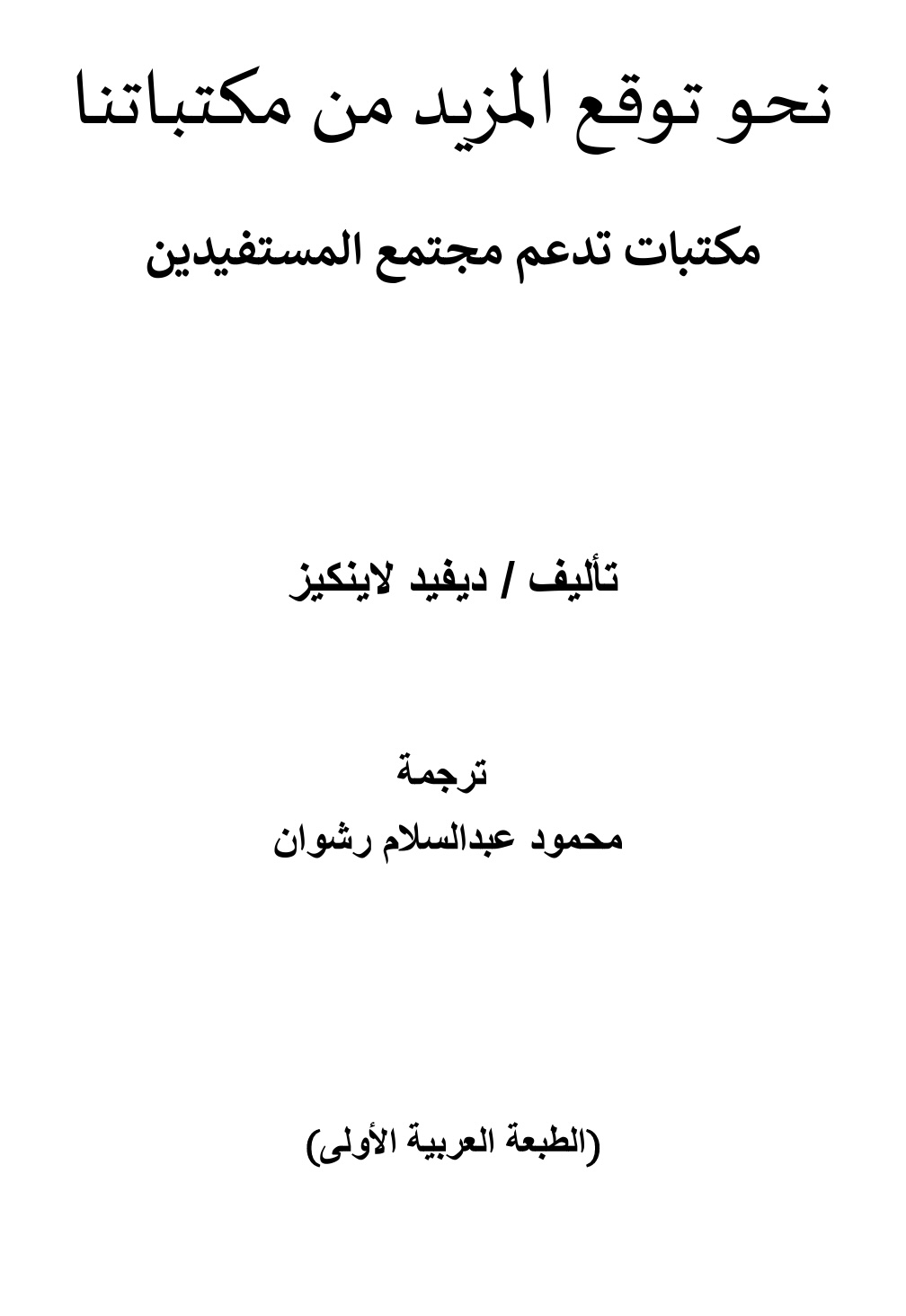
Here’s a brief biography of Mahmoud, the translator:
“As a passionate advocate for Guided reading and lifelong learning, I have served as a High School Librarian since 2002. My mission is to foster a love for reading, critical thinking, and information literacy among school community members.
I work closely with both students and teachers to facilitate access to information in a wide variety of formats and guiding students through research for their projects, I’m here to empower our school community.
One of my passions is introducing young adults to literature. I spend quite a lot of time daily discussing with students how to choose their readings to improve their skills and increase their knowledge. There’s nothing quite like seeing a student’s eyes light up when they discover a new favorite book!
I hold a master’s degree in library and information science from University College London [MLIS UCL2020].
I believe that a librarian isn’t just a keeper of books; we’re navigators, linkers, and champions of knowledge. If anyone needs a book recommendation or has a research question, we are here with a warm smile and a wealth of resources! ?”
Thank you for all your kindness and work Mahmoud! And if there are any publishers looking for print and/or distribute this translation, please let me know and I can put you in touch with Mr. Rashwan.
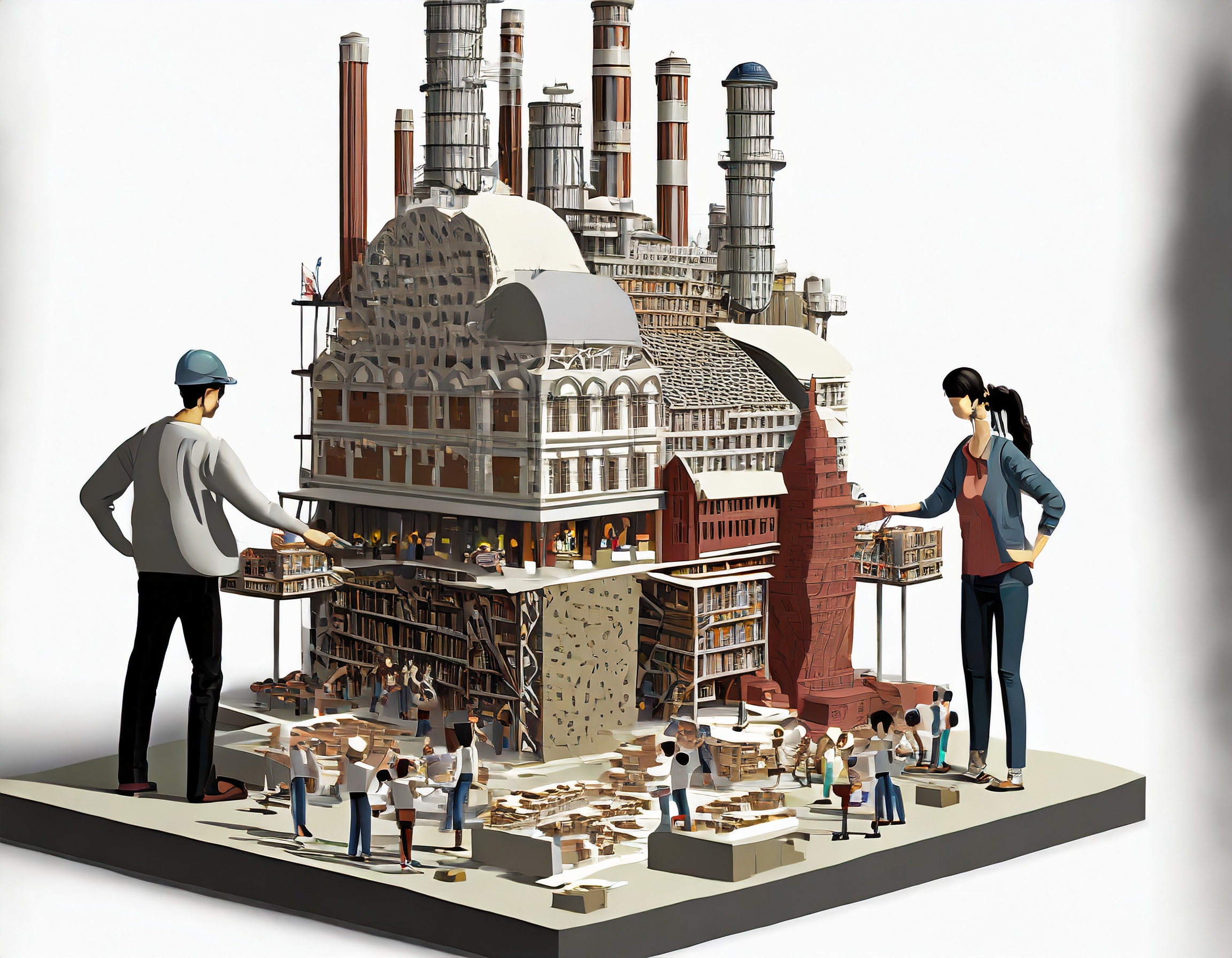
Last year I published “The Lankes Corollaries” in the Access: An International Journal of Nepal Library Association. I have recreated it here…and enhanced it a bit (it was published with a creative commons license). To cite it, please support my colleagues in Nepal:
Lankes, R. D. (2023). The Lankes Corollaries . Access: An International Journal of Nepal Library Association, 2(01), 200–208. https://doi.org/10.3126/access.v2i01.58999
Abstract: This piece explores a series of corollaries to Ranganathan’s five laws of librarianship. These corollaries talk about how librarians work with communities to ensure that service is shaped throughout the community. Such shaping moves libraries away from some pre-determined standard model, and into hyperlocal organizations ultimately facilitating knowledge creation.
Introduction: In 1931 S. R. Ranganathan proposed 5 laws of librarianship (Ranganathan, 1931)
While others have tried to expand/revise/or update them (Gorman, 1998, Simpson 2008), the originals stand up. Clearly today we would expand books to resources and even services (e.g., services are for use) and readers have become members or just “people” – as we see that the library is a part of a person’s life – hopefully a significant part.
However, Ranganathan was clearly being aspirational: what we want to be, not so much how we get there. What I propose are 5 corollaries to the laws–guide post for library workers and organizations to achieve these lofty goals:
Lankes, R. David (2023). The Lankes Corollaries. Access: An International Journal of Nepal Library Association. 2(1). Available: https://doi.org/10.3126/access.v2i01.58999
ABSTRACT: This piece explores a series of corollaries to Ranganathan’s five laws of librarianship. These corollaries talk about how librarians work with community’s to ensure that service is shaped throughout the community. Such shaping moves libraries away from some pre-determined standard model, and into hyper local organizations ultimately facilitating knowledge creation.
Lankes, R. David (2023). The Vital Role of Libraries and Democracy Needs Protection. Clip de SEDIC, Revista de la Sociedad Española de Documentación e Información Científica. Available: https://doi.org/10.47251/clip.n87.112
ABSTRACT: The current spate of materials challenges in libraries globally calls out for new defenses.Concepts of library neutrality and librarian objectivity fall flat in light of current developments, and against organized challengers not interested in objectivity. New defenses of library services must be based on librarian expertise and activated network of diverse community members. The field needs to strengthen societal protections for librarians in the conduct of their work.
My Publishers Weekly piece on community libraries has been translated into Italian by the Laboratori Bibliosociali. You can access it here: https://www.laboratoribibliosociali.it/david-lankes-biblioteche-di-comunita-in-corea-del-sud/?fbclid=IwAR0d4bazhbrv7jpV4FWmvDbzdIPhSCtVajrGwAlBNWIHXfL5UH8mCwpXrnc