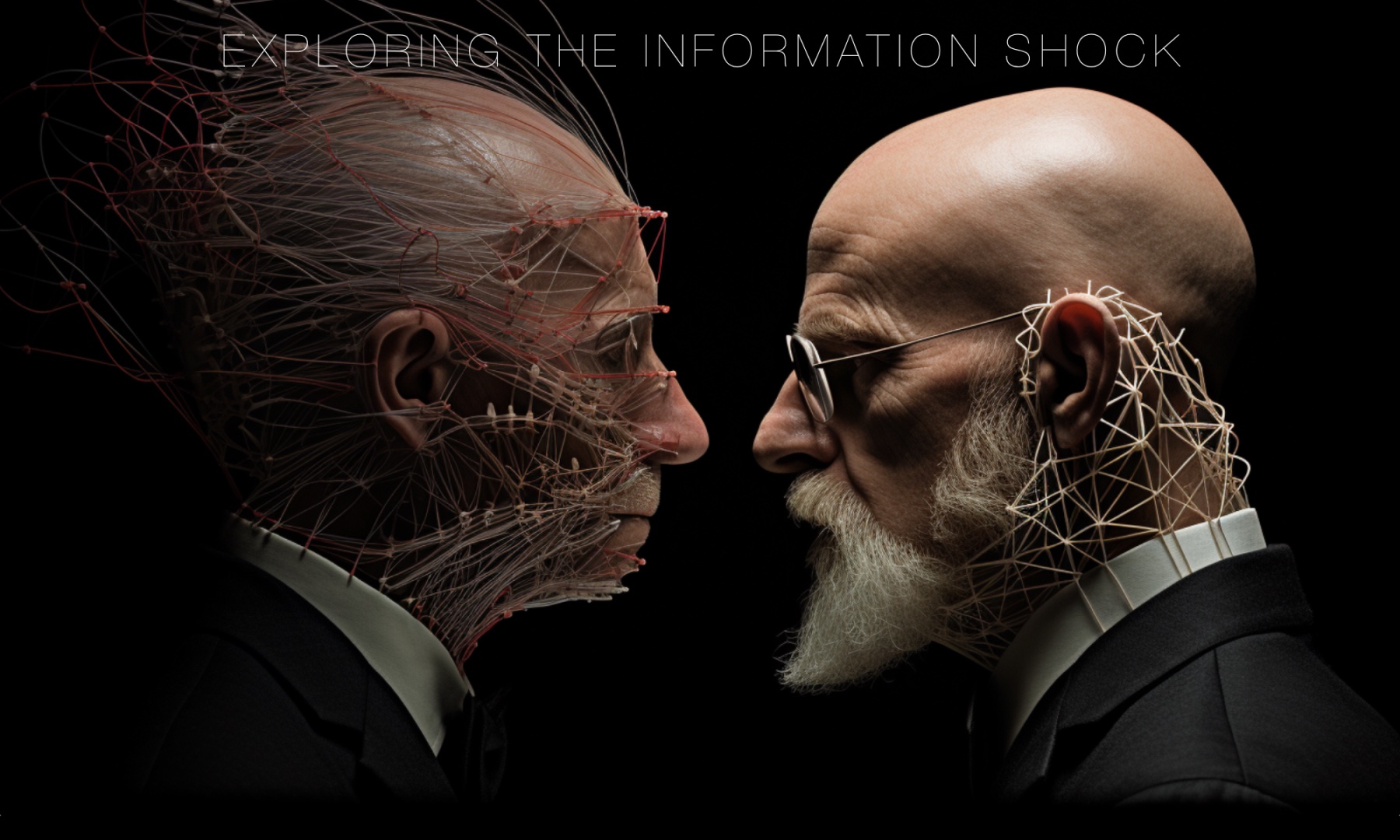
R. David Lankes Releases New Book on Libraries, AI, and Democracy

FOR IMMEDIATE RELEASE
June 27, 2025


R. David Lankes Releases New Book on Libraries, AI, and Democracy

Triptych: Death, AI, and Librarianship reframes the future of libraries of all types as a lifeline for community and connection.

Philadelphia, PA — R. David Lankes, in association with Library Journal, proudly announces the release of Triptych: Death, AI, and Librarianship—a daring, deeply personal, and visionary work that confronts the most urgent challenges facing libraries today.

In an era marked by deep social divides, technological disruption, and growing isolation, Triptych offers a transformative vision: that libraries can—and must—do more than inform; they can save lives. Joined by Jain Orr and Qianzi Cao, Lankes presents three bold lectures that challenge librarians to embrace their role as catalysts for community, justice, and human resilience.

“Triptych is a manifesto,” says Lankes. “It’s a call for librarians to resist despair, champion equity, and guide communities through the ethical complexities of artificial intelligence and rising authoritarianism—not by standing apart, but by standing together.”

Library Journal will feature a series of exclusive excerpts, author interviews, and companion essays on its digital platforms. In addition, LJ will partner with Lankes to host webinars throughout the coming year exploring each of the book’s major themes—from AI ethics to joy as resistance and the emergence of “feral librarians.”

Inside Triptych, readers will find:

  • A radical redefinition of librarianship rooted in mission, empathy, and action
  • A critical look at AI’s impact on trust, literacy, and community cohesion
  • A passionate defense of libraries as democratic, transformative spaces
  • A post-industrial vision for libraries centered on agency, adaptability, and radical inclusion

“Dr. Lankes’ reputation as a provocative and compassionate library thinker is reinforced in this latest work,” said Library Journal Editor-in-Chief Hallie Rich. “Triptych presents a vision for librarianship grounded in the issues libraries grapple with today, and we’re excited to help bring these ideas into the center of the profession’s conversation.”

Triptych: Death, AI, and Librarianship is available now through Amazon, and soon through major booksellers.

The first of a series of excerpts from Triptych: Death, AI, and Librarianship, can be found on the Library Journal website.


Media Contact:
rdlankes@utexas.edu

Author Website: https://DavidLankes.org

Library Journal Website: https://www.libraryjournal.com/


About Library Journal:
Founded in 1876, Library Journal is the leading voice of the library community, providing trusted reporting, reviews, and insights to help libraries and librarians thrive in a changing world.

About R. David Lankes:
R. David Lankes is the Virginia & Charles Bowden Professor of Librarianship at the University of Texas at Austin and a leading advocate for community librarianship. His work explores how libraries can empower communities to confront real-world challenges with knowledge, empathy, and hope.
Don’t Look Away

On a recent trip to Europe, I was repeatedly asked the same question, “what can we do?” The European library community (and I’m sure the larger global library community) are looking at developments in the United States with confusion and anxiety. How can the federal government close agencies, target the Institute for Museum and Library Services, cut budgets at the National Agricultural Library, stop research at the National Institutes of Health, fire the National Archivist and undo decades of work in libraries and cultural heritage? How can a country so self-identified with freedom and the freedom of speech create a list of banned words that are used indiscriminately to purge websites of collections, data, and documents?

The first fear was that cultural institutions would be closed. The new reality is that they will be transformed, once again, into agents of propaganda and indoctrination. The Institute for Museum and Library Services is not being closed. Instead, the new director wants to use the institute to “restore focus on patriotism, ensuring we preserve our country’s core values, promote American exceptionalism and cultivate love of country in future generations.”

Beyond the federal government how can EU librarians and institutions, I was asked, respond to a continuing wave of book banning, firing of librarians consider “too liberal,” and opening librarians up to prosecution for doing their jobs and supporting their professional organizations?

I have one simple answer: don’t look away.

Continue reading “Don’t Look Away”

A Longhorn Amongst the Tulips

With the generous support of the Dutch Library Association (thank you Klaas Gravestejin), I am headed to the Netherlands for a few weeks. There I’ll be spreading the word on the importance of centering librarianship on the communities we serve.

I am so looking forward to meeting with my Netherland colleagues. The country has long been a center of innovative librarianship. From Delft to Utrecht to Amsterdam to Tilburg to the amazing National Library of the Netherlands it is honestly more pilgrimage than a trip. I even get to catch up with folks like Irene Harmsen and the cohort of Community Librarians.

I am so looking forward to seeing colleagues and making new connections.

My current public event schedule:

29th MayInnovatie Dag Prodent Fabriek Amersfoort
4th JuneVisit Dutch StoryHouse  Cultura & Zo Nootdorp
6th JuneNational Members Netherlands Library Association for PL at Beeld and Geluid Hilversum

I’ll be posting slides and updates (and probably pictures of canals) here.

A special thank you to Erik Boekesteijn of the National Library for making this happen. Honestly, hanging with him is the real highlight of the trip.

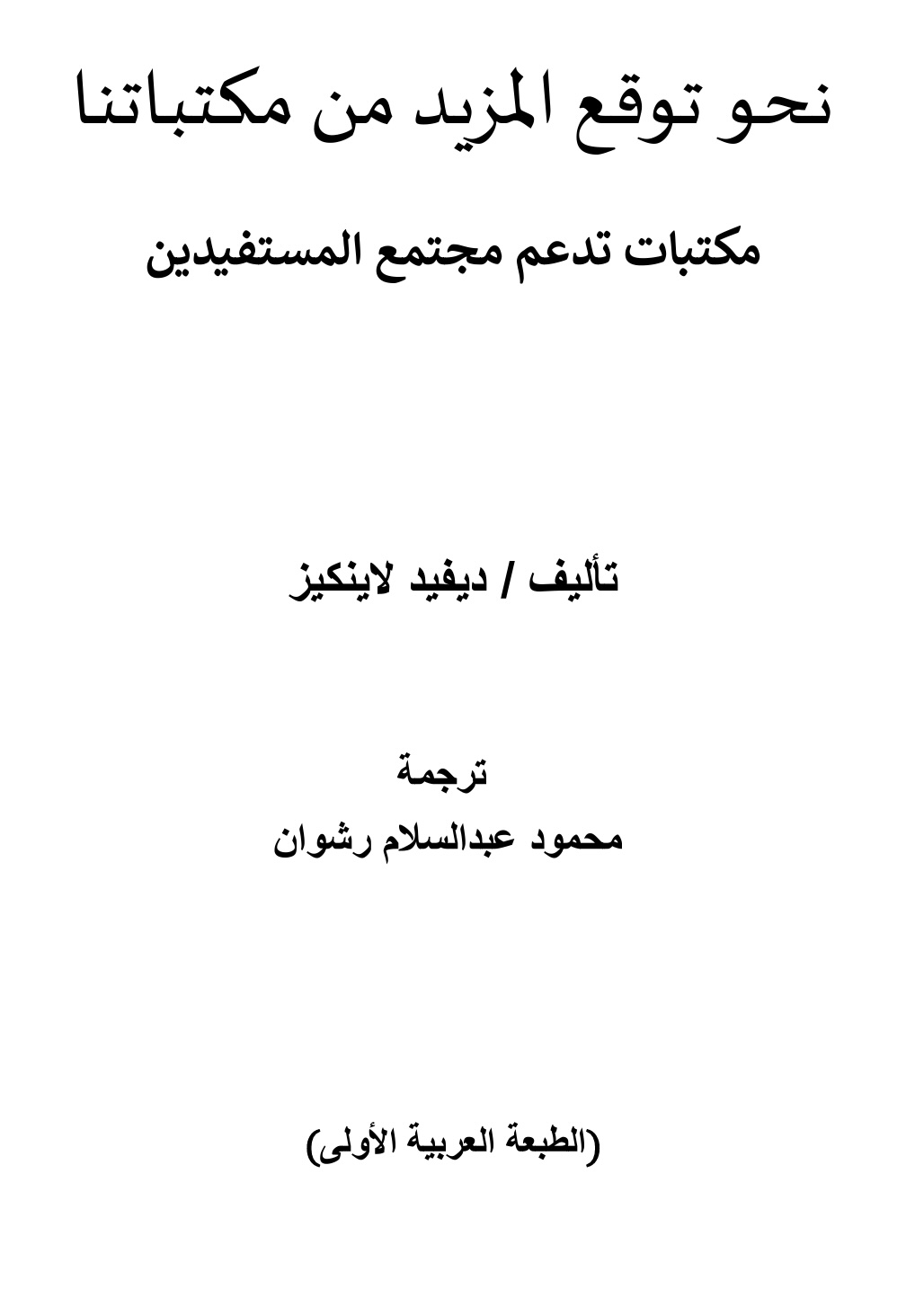
Expect More now in Arabic

Thanks to Mahmoud Rashwan, Expect More is now available free in Arabic. You can download the PDF on the Expect More page or directly here.

Here’s a brief biography of Mahmoud, the translator:

“As a passionate advocate for Guided reading and lifelong learning, I have served as a High School Librarian since 2002. My mission is to foster a love for reading, critical thinking, and information literacy among school community members.

I work closely with both students and teachers to facilitate access to information in a wide variety of formats and guiding students through research for their projects, I’m here to empower our school community.

One of my passions is introducing young adults to literature. I spend quite a lot of time daily discussing with students how to choose their readings to improve their skills and increase their knowledge. There’s nothing quite like seeing a student’s eyes light up when they discover a new favorite book!

I hold a master’s degree in library and information science from University College London [MLIS UCL2020].

I believe that a librarian isn’t just a keeper of books; we’re navigators, linkers, and champions of knowledge. If anyone needs a book recommendation or has a research question, we are here with a warm smile and a wealth of resources! ?”

Thank you for all your kindness and work Mahmoud! And if there are any publishers looking for print and/or distribute this translation, please let me know and I can put you in touch with Mr. Rashwan.

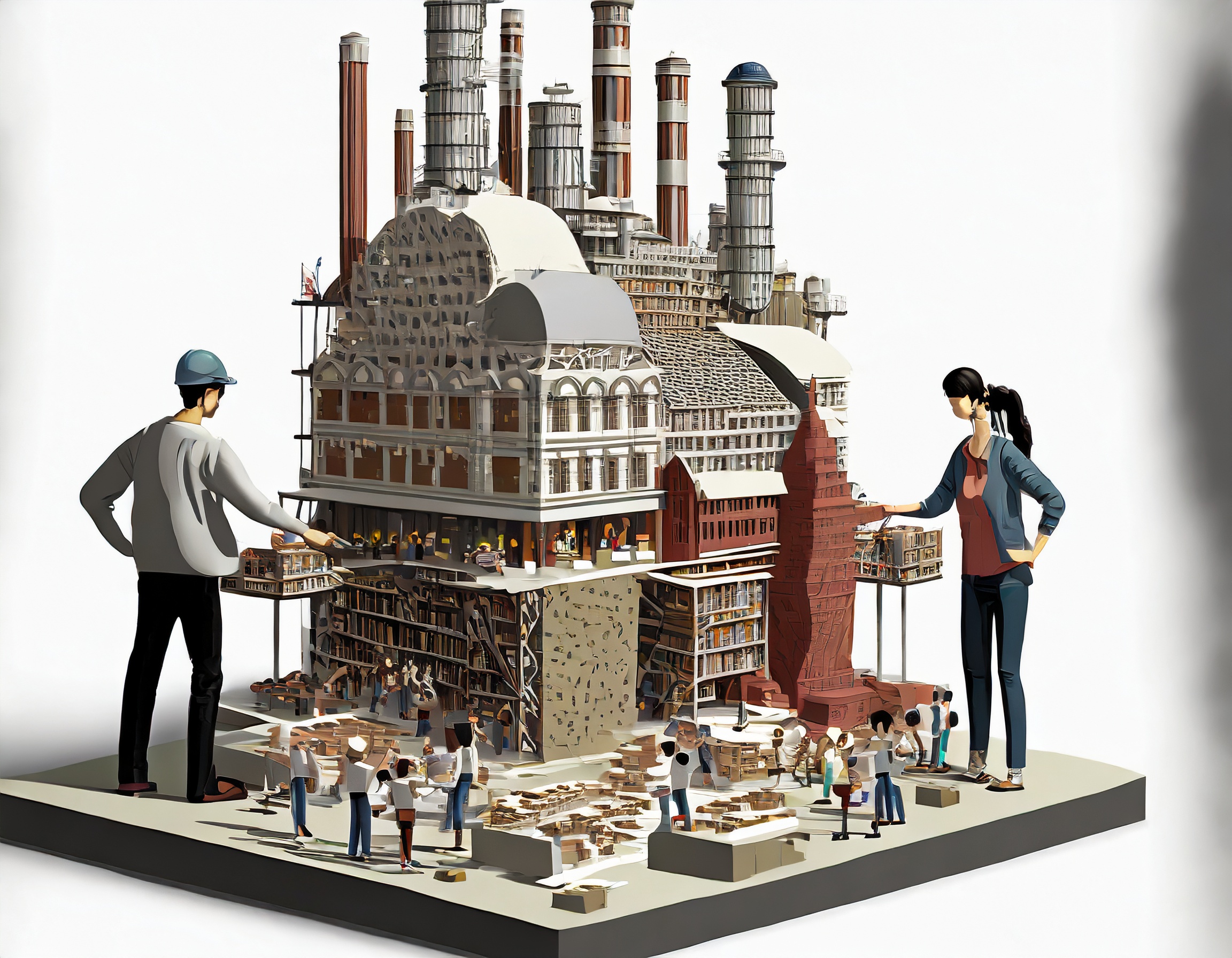
Libraries of the Future, Wildest Dreams

Erik Boekesteijn made a fantastic video on some library thinkers talking about the library of the future. It was an honor to be on the virtual stage with Nick Poole, Jane Cowell, Sandy Hirsh, Futurist Lidewij Edelkoort at the Computers in Libraries 2024 conference.

Book Bans: Changing the Narrative in Libraries

“Book Bans: Changing the Narrative in Libraries” Leadership Staff Meeting. Central Arkansas Library System. Little Rock, AK

Abstract: While librarians should never surrender the fight for intellectual freedom, there is utility in changing the narrative of the conversation. Rather than fighting a charged reactionary “battle” against censorship, we should use local narratives that emphasize the professionalism of librarians and the larger societal benefits of public libraries. AI and workforce development provides one such opportunity.

The Lankes Corollaries Redux

Last year I published “The Lankes Corollaries” in the Access: An International Journal of Nepal Library Association. I have recreated it here…and enhanced it a bit (it was published with a creative commons license). To cite it, please support my colleagues in Nepal:

Lankes, R. D. (2023). The Lankes Corollaries . Access: An International Journal of Nepal Library Association, 2(01), 200–208. https://doi.org/10.3126/access.v2i01.58999 

Abstract: This piece explores a series of corollaries to Ranganathan’s five laws of librarianship. These corollaries talk about how librarians work with communities to ensure that service is shaped throughout the community. Such shaping moves libraries away from some pre-determined standard model, and into hyperlocal organizations ultimately facilitating knowledge creation.

Introduction: In 1931 S. R. Ranganathan proposed 5 laws of librarianship (Ranganathan, 1931)

  1. Books are for use
  2. Every person his or her book
  3. Every book its reader
  4. Save the time of the reader
  5. A library is a growing organism

While others have tried to expand/revise/or update them (Gorman, 1998, Simpson 2008), the originals stand up. Clearly today we would expand books to resources and even services (e.g., services are for use) and readers have become members or just “people” – as we see that the library is a part of a person’s life – hopefully a significant part.


However, Ranganathan was clearly being aspirational: what we want to be, not so much how we get there. What I propose are 5 corollaries to the laws–guide post for library workers and organizations to achieve these lofty goals:

  1. The mission of librarians is to improve society through facilitating knowledge creation in their communities
  2. To be a librarian is to be a radical positive change agent with your community
  3. A room full of books is a closet, but an empty room with a librarian serving their community is a library
  4. Bad libraries build collections, good libraries build services, great libraries build communities
  5. A library should be a safe space to explore dangerous ideas.