Expect More:Demanding Better Libraries For Today’s Complex World. Lankes, R. David (2012). Jamesville, NY: Riland Publishing.
Ned Quist Reviews Expect More
“Lankes provides a cogent view of the best libraries of today and how they will move into the future. He focuses both on the librarians and their role in their communities (and less on their role as keepers of books or their surrogates) and on libraries as places for learning (and less on their function as book museums). It’s a brief, inspirational and breezy read and a great introduction to his larger work The Atlas of New Librarianship (MIT, 2011)”
– Ned Quist, AUL for Research and Outreach, Brown University Library
A New Review of Expect More
“Yet another magnificent title from Mr Lankes. He discusses some of the same issues that are raised in the Atlas, but he’s coming from a different viewpoint with this book. It’s an excellent read if you want to know how libraries need to change, develop and evolve into the future. His vision is both fascinating and compelling – my own gripe is that I would be happier if it was at least twice as long! To be fair though, it’s intended as a quick read.
This should be read by anyone with an interest in libraries, librarians and librarianship, who has an open mind and is prepared to consider challenging and exciting concepts.”
– Phil Bradley on GoodReads
eBook Sale
It’s a back to school sale on Expect More: Demanding Better Libraries For Today’s Complex World ebooks. All formats now $9.99.
Why now? Doesn’t school start in the fall? Not at Syracuse University. All our distance grad students start in July.
As a reminder, here are your options for getting Expect More in ebook form:
SmashWords (preferred vendor) for DRM free ebooks for online reading, Kindle, Apple devices, Sony, and Nook can be found at: https://www.smashwords.com/books/view/171252
Or buy it right on your favorite device:
Apple Store:
iPad: http://itunes.apple.com/us/book/expect-more/id537795321?mt=11
IPhone and other devices: http://itunes.apple.com/us/book/expect-more-demanding-better/id541812851?mt=11
Barnes & Nobel Nook: http://www.barnesandnoble.com/w/expect-more-r-lankes/1111759955?ean=2940014646581
The Road to Self-Publishing
“The Road to Self-Publishing” ALA 2012 Conference Session, Anaheim, CA.
Abstract: Pragmatic advice for publishing in academia
Slides: https://davidlankes.org/rdlankes/Presentations/2012/PubALA.pdf
Audio: https://davidlankes.org/rdlankes/pod/2012/ACRL.mp3
Screencast:
Expect More Sampler
Here is a sample chapter (Chapter 1) and the Table of Contents of Expect More. You can see a slightly larger sample if you go to the SmashWords site and use the HTML viewer to see the sample.
Table of Contents
Acknowledgements iv
Introduction 1
A Special Note for Librarians 2
1. The Arab Spring: Expect the Exceptional 3
2. The Argument for Better Libraries: Expect Impact 9
Collective Buying Agent 10
Economic Stimulus 13
Center of Learning 16
Safety Net 17
Steward of Cultural Heritage 19
Cradle of Democracy 20
Symbol of Community Aspirations 24
3. The Mission of Libraries: Expect More Than Books 27
I Love Reading…No Really 33
Mission to Nowhere? 34
A Mission Based on Higher Expectations 39
4. Facilitating Knowledge Creation: Expect to Create 41
Library as Facilitator 42
What is Knowledge? 43
Expanding the Definition of Facilitation 47
Teacher, Librarian, Tinker, Spy 58
5. Improve Society: Expect Grander 59
Expecting More Than Pie and Prostitutes 61
Of the Community 62
Walled Gardens 66
Grand Challenges 67
Is My Library that Grand? 71
6. Communities: Expect a Platform 75
Library as Platform 76
Libraries as Place 83
7. Librarians: Expect Brilliance 87
Librarian by Hire 87
Librarian by Degree 88
Librarian by Spirit 92
Salzburg and a Few of My Favorite Things 93
The Facilitators 96
Adding Up a Librarian 98
8. Action Plan: Expect More 101
Action Plan for Great Libraries 101
Action Plan for Bad Libraries 103
Action Plan for Good Libraries 111
About the Author 113
Index—Expect More 115
Sample Chapter: The Arab Spring: Expect the Exceptional
The Arab Spring had come to Egypt. In early 2011, on the heels of a successful revolution in Tunisia, Egyptians took to the streets to demand reforms from a government regime that had been in power for nearly 30 years. While much of the media fixated on protestors who occupied Tahrir Square in the Egyptian capital of Cairo, many protests started in the port city of Alexandria. In Alexandria, as in Cairo, people from across generations and the socio-economic scale rioted to demand liberty, justice, and social equity. In an attempt to restore the constitution, what was seen primarily as a peaceful uprising lead to the deaths of at least 846 people, and an additional 6,000 injured[1] across Egypt. On January 28 at 6 pm, after the prisons had opened, releasing murderers and rapists onto the street, all security withdrew from the streets of Alexandria. Roving gangs of looters took to the streets to take advantage of the chaos.
In Egypt’s port city, the violence and looting devastated government buildings. Where offices once stood, only burned-out rubble remained. Protestors went from building to building pulling down the symbols of corrupt power. Some looters and protestors then began to eye the Library of Alexandria.
President Mubarak, the focus of the uprising, had opened the modern library in 2002 at a cost of about $220 million. According to the library’s website, Mubarak built it to “recapture the spirit of openness and scholarship of the original,”[2] the famous ancient Library of Alexandria—one of the wonders of the ancient world.
As it became apparent that the library might be in danger, protestors joined hands and surrounded the Library of Alexandria. Their goal was not to attack it or raid it, but to protect it. Throughout the protests and looting, the protestors—women, men and children—stood firm and protected the library. In essence, they were retaking the library for the people. After the uprising had subsided, when President Mubarak had stepped down and the protestors were celebrating their victory around the country, not a window of the library had been broken, not a rock thrown against its walls. Why, in the midst of tearing down the regime, did the people of the nation protect the library?
Why?
Why are stories like this, while maybe not quite so dramatic, repeated across the U.K. and the United States? As cities faced with a devastating financial crisis sought to close library branches, citizens rallied. Protestors disrupted town halls and city council meetings. Citizens picketed, and in Philadelphia, the City Council went so far as to sue the Mayor over the closing of libraries.
In Kenya, the government is building public libraries throughout the country, in rural and urban areas alike. Where the communities are too remote, they have built book carts—5,000 books in a wooden cart pulled by donkeys. In the even more remote northern sections of the country, they strap carts and tents to camels. Inside the villages, the carts are opened and the tents erected to allow parents and children an opportunity to learn. In these villages, camels provide transportation, labor, milk, and meat; even their dung is dried to power stoves. Now this essential animal is seen as providing another critical service: bringing knowledge to the people.
In the countryside along the coast of Colombia, Luis Soriano urges along his two donkeys, Alfa and Beto. On the backs of the donkeys are crates of books. Luis, a primary school teacher by trade, carries a sign reading “Biblioburro.” He is bringing books to small villages and spreading literacy throughout the countryside to children who have seen too much violence and conflict for their years. He began with 70 books. Through donations he has grown the collection to over 4,800 volumes, far past the capacity of his four-legged friends. He now houses the collection in a half-built room that has become an official satellite to the Santa Maria Community Library, some 180 miles away[3].
We find libraries in the finest castles of Europe and in the midst of the Occupy Wall Street populist protests in the States. Libraries are embraced by the elite and the commoner alike. We find librarianship in jungles and deserts, in schools, corporations, and in government agencies.
When we try to discover why, we find that there is power in libraries and steel in librarians. It goes deeper than tradition, buildings, and books. The reason for the protests and protectiveness over libraries is not found in collections of materials or columns and architecture. To find the answer to this riddle, one must look past the buildings and the books to the professionals who, throughout history, have served humanity’s highest calling—to learn.
Libraries and librarians stood at the center of a growing Egyptian empire in the third century BC and the expansion of mathematics in Arabia in the fourteenth century.[4] Libraries helped bring Europe out of the Dark Ages and into the Renaissance, and helped democracy thrive in a post-colonial United States of America. Now, with the advent of the Internet and a new digital age, librarians are once again pointing the way towards a better society, founded in knowledge and giving respect to diverse views. This book is about what libraries and librarians can tell us about creating a brighter future and what kind of libraries and librarians we are going to need to make that future a reality.
Today’s librarians are using the lessons learned over that nearly 3,000-year history to forge a new librarianship based not on books and artifacts but on knowledge and community. They are taking advantage of the technological leaps of today to empower our communities to improve. The librarians of today are radical positive change agents in our classrooms, boardrooms, and legislative chambers. They built the web before we called it the web. They were crowdsourcing knowledge and searching through mountains of information before Google, before Facebook, and even before indoor plumbing. Today’s new librarians are not threatened or made obsolete by the Net. They are pushing the Net forward and shaping the world around you—often without your notice.
The field of librarianship represents an investment of nearly $7 billion in the U.S. and $31 billion worldwide.[5] In an age when traditional institutions are declining, library usage has grown steadily over the past twenty years. Did you know that there are more public libraries than McDonald’s restaurants in the U.S. and that Americans go to libraries nearly three times more often than they go to the movies?[6] By understanding librarians and libraries we can understand how to build credibility and trust in a community overwhelmed with change and choices. We can discover how to create an environment to disagree and maintain a civil discourse. Ultimately, by understanding new librarianship, we can even understand something as grand as the role of a citizen in society.
Perhaps the biggest “why” question you can ask, and the one at the center of this book, is why do so many people see librarianship as antiquated, conservative, and less-than-inspiring? Why is it that while folks love the idea of libraries and librarians, they are quick to limit them to books or children, or simply think of them as historical holdovers? The answer is not that these people are wrong, but that they need to expect more. Too many libraries are about books. Too many librarians are reliving history and are stuck in a sort of professional conservatism that favors what they do over why they do it. Too many librarians see their collections, not the community, as their jobs. Too many libraries are seeking to survive instead of innovate, and promote the love of reading over the empowerment of the populations they serve. I am not claiming that these librarians are the majority, but they are too numerous and their communities (you) expect too little of them.
This book is written not for those librarians but for the people who either support or oversee libraries. This includes college provosts, students, parents, board members, volunteers, and, well, just about everyone who has ever gone to school or pays local taxes. You need to know what libraries are capable of, and you need to raise the bar on your expectations.
Throughout this book you are going to find examples of amazing libraries and librarians. Today, many in the field would call them exceptional, just as you might call the librarians in Egypt and Kenya exceptional. This is the root of the problem. These libraries may have been in exceptional circumstances, but their dedication to service and their connection to their communities should not be seen as exceptions to the norm. They should be the norm to which all libraries aspire.
In this book, you are going to read about a public library that has created a Fab Lab—a space where the community can work with 3D printers and make new inventions. You are going to read about a school library where the librarian is too busy helping teachers raise their performance to shelve books. You are going to read about librarians creating new companies in rural Illinois and transforming lives in Dallas. These are brilliant libraries and librarians, but if you see them as exceptional—as above and beyond the norm—you expect too little of your library.
Here is the key to a successful library: you. In a city or a Fortune 500 company, the library must shape itself around you and the goals of your community. If your community strives for greatness, the library should be great. If you are concerned about the future, or the economy, or the future of democratic discourse in this country, your library should be concerned as well. If you make these expectations known, if you arm yourself with what is possible and not what is, then the library and librarians can meet those expectations and goals. Of course, this is a two-way street. Great libraries expect a lot of their communities as well. Yes, great libraries require financial support, but even more than that they require open communication about your needs, your challenges, and your dreams.
This book will not be a love letter to libraries. I am not trying to turn you into a librarian. Instead, this is meant to begin an honest and realistic dialog about the place of libraries and librarians in your communities. Join me now as we explore the true potential of libraries and librarians.
[1] http://en.wikipedia.org/wiki/2011_Egyptian_revolution—Yes, a librarian and university professor just cited Wikipedia. I do it a lot throughout the book. There is nothing inherently wrong or non-credible in Wikipedia. In fact, it is more transparent in the construction of information than most published encyclopedias. I cite it because it is easy for the reader to get to, it is a great jumping-off point through references to other works, and I have verified the information in other sources…like we all should do.
[2] http://www.bibalex.org/aboutus/overview_en.aspx (accessed May 19, 2012)
[3] see http://en.wikipedia.org/wiki/Biblioburro (accessed May 8, 2012), and http://www.nytimes.com/2008/10/20/world/americas/20burro.html (accessed May 8, 2012)
[4] http://www-history.mcs.st-and.ac.uk/HistTopics/Arabic_mathematics.html (accessed May 8, 2012)
[5] http://www.oclc.org/us/en/reports/2003libsstackup.htm (accessed May 19, 2012)
[6] American Library Association (2010). Quotable facts about America’s libraries. Retrieved from http://www.ala.org/ala/aboutala/offices/ola/quotablefacts/QF.3.8.2010.pdf
Announcing Expect More: Demanding Better Libraries For Today’s Complex World
Click for Larger ImageAnnouncing Expect More: Demanding Better Libraries For Today’s Complex World
Now available at http://www.riland.org.
Libraries have existed for millennia, but today many question their necessity. In an ever more digital and connected world, do we still need places of books in our towns, colleges, or schools? If libraries aren’t about books, what are they about?
In Expect More, David Lankes, winner of the 2012 ABC-CLIO/Greenwood Award for the Best Book in Library Literature, walks you through what to expect out of your library. Lankes argues that, to thrive, communities need libraries that go beyond bricks and mortar, and beyond books and literature. We need to expect more out of our libraries. They should be places of learning and advocates for our communities in terms of privacy, intellectual property, and economic development.
This book is written for the people who support and oversee libraries. This includes college provosts, students, parents, board members, volunteers, and, well, just about everyone who has ever gone to school or pays taxes. You need to know what libraries are capable of, and you need to raise the bar on your expectations. Expect More is a rallying call to communities to increase their expectations for great libraries.
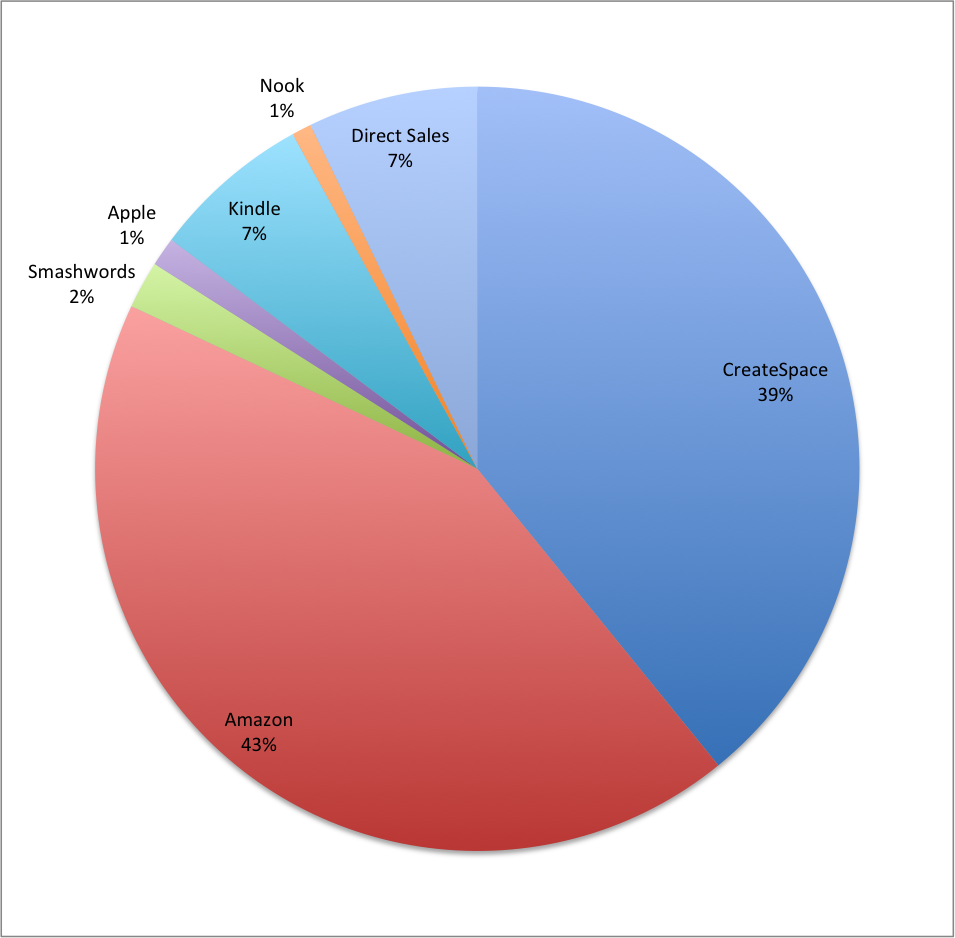
Buy the book in print at CreateSpace (the preferred retailer) and Amazon. It is also available as an eBook from Smashwords for all major platforms.
For more information on the book, to order a copy, or to join the conversation about improving libraries, go to the book’s website http://www.riland.org.
Book Tease
A few weeks ago I posted about my new book Expect More: Demanding Better Libraries For Today’s Complex World. Well, It is coming out Monday. All next week I’ll be posting more about the book including the first chapter and a sort of “behind the scenes” post about self-publishing. In the meantime I wanted to share a few pictures of the eBook version and the proof.
Here’s the proof of the book. What still amazes me is that I finished the book on Saturday and had the proof in my hand by Tuesday:

Those of you who have read the Atlas will be glad to hear that it is 124 pages and paperback. It was written to be a single sitting read by busy folks like librarians, board members, and provosts.
Here is the eBook version running on an iPad, Kindle Touch, Kindle Fire, and a Nook Tablet:
The book will be sold without DRM.
In any case, look for much more on Monday!
Ebook Experiments
I am getting ready for the release of my new book Expect More. The final edits are underway, and as I wait I’ve been playing around with different ebook platforms. I’ve taken the OITP white paper that started it all (participatory librarianship) Participatory Networks: The Library as Conversation and made ebook versions using Smashwords and the iTunes book store via iBooks Author. It’s free and feel free to download the white paper (a bit dated at this point).
Smashwords was a piece of cake just uploading a Word file. We’ll see if it gets the book listed in other book stores (like Barnes & Noble). Click here to see the Smashwords entry (https://www.smashwords.com/books/view/164561).
Apple’s iTunes is typical Apple. Very easy to put together the files, then a bit bureaucratic to get it submitted and approved. Still, fast turn around and you can find it by searching the bookstore through iTunes.
By the way, I went most of the way with Amazon but they required I charge for the book.
Atlas Acknowledgements
As I announced, the Atlas of New Librarianship has received the 2012 ABC-CLIO/Greenwood Award for the Best Book in Library Literature. While I have been extremely grateful for the notes of congratulations, I cannot take all the credit. While the Atlas has my name on the front cover, it would not have been possible without the contributions and support of a lot of remarkable people. I put this list in the book, but it is always worth repeating (and augmenting a bit):
Atlas Research Team
This is the crew that did the heavy lifting on the Atlas manuscript through editing, reviewing, arguing, and generally getting it done. Todd Marshall, Angela Usha Ramnarine-Rieks, Heather Margaret Highfield, Jessica R. O’Toole, and Xiaoou Cheng. Special thanks to Julie Strong for her help.
Agreement Researchers
One of the advantages of being in an innovative school like Syracuse University’s iSchool is that every so often I get to make classes up. So I did. The students did a fantastic job of slogging through rough drafts of the threads and doing a lot of really amazing work on the agreements and discussion questions.
Jocelyn Clark, Amy Edick, Elizabeth Gall, Nancy Lara-Grimaldi, Michael Luther, Kelly Menzel, Andrea Phelps, Jennifer Recht, Sarah Schmidt, and William Zayac.
Participatory Networks White Paper
The work in this Atlas really began with the formation of participatory librarianship. That happened because Rick Weingarten and Carrie McGuire of the American Library Association’s Office for Information and Technology Policy (OITP) commissioned a white paper on social networking in libraries. Much of the foundational work on these concepts came from long hours of conversation between my co-authors, Joanne Silverstein and Scott Nicholson.
From the white paper on, OITP has been a great support in the work. I thank them and all the folks at ALA’s Washington Office: Emily Sheketoff, Rick Weingarten, Carrie McGuire, and Alan Inouye.
Starter Kit Sites
Most of the examples and experiments throughout the Atlas come from a wide variety of library and information settings. The following folks were gracious enough to open their doors for me and share their insights.
Blane Dessy and the librarians of the Department of Justice Law Libraries.
Linda Johnson and Sandra Horrocks of the Free Library of Philadelphia Foundation, and Elliot Shelkrot, Joe McPeak, Kyle Smith, and all of the great librarians (past and present) of the Free Library.
Jeff Penka, Susan McGlamery, Paula Rumbaugh, and Tam Dalrymple of OCLC’s QuestionPoint service.
Robert Johnston and the librarians of LeMoyne College.
Elizabeth Stephens of the Glendale Library.
Participatory Librarianship Research Group
After the white paper was out, a group of talented faculty and doctoral and master’s students worked with me to further refine the ideas now in this Atlas: Todd Marshall, Angela Usha Ramnarine-Rieks, Joanne Silverstein, Jaime Snyder, Keisuke Inoue, David Pimentel, Gabrielle Gosselin, Agnes Imecs, and Sarah Webb.
Special thanks to Meg Backus for her ideas on innovation.
MIT Press
Marguerite Avery, Senior Acquisitions Editor, for giving the book a chance.
ACRL
Kathryn Deiss, for insisting that I had to publish with ACRL, and Mary Ellen Davis, who told me I was allowed to piss off anyone I needed to.
The ILEADU Team, the State Library of Illinois, and IMLS
Thanks to Anne Craig, Gwen Harrison, and all the folks involved with the ILEADU Project for giving me a chance to try out some of these ideas.
A special thank you to Mary Chute of IMLS for her reaction and support. Her leadership has pushed the field forward.
The John D. and Catherine T. Mac Arthur Foundation
Thanks to Kathy Im and Elspeth Revere for supporting a study on the future of libraries and the development of the Reference Extract Idea. It is a rare treat to find funders who are great collaborators and ask the best questions. Also thanks to Connie Yowell for support on my credibility work.
Reference Extract is very much a product of brilliant collaborators like Jeff Penka, Mike Eisenberg, Eric Miller, and Uche Ogbuji.
Ideas and Reactions
I do practice what I preach. Most of my learning happens in conversations over lunch, coffee, and in hallways. What I love about the field of librarianship is that you are never at a loss for interesting company. I am going to miss a lot of people in making this list, but I wanted to give a shout out to some of the folks who had patience with me droning on about new librarianship.
Scott Nicholson, Joanne Silverstein, Meg Backus for the brilliant concepts on innovation versus entrepreneurship, Joe Janes, Eli Neiburger, Jill Hurst-Wahl, Mary Ghikas, George Needham, Chuck McClure, Michael Eisenberg, Joe Ryan, Megan Oakleaf, Blythe Bennett (who cemented the name for the Atlas), and Buffy Hamilton.
An apology to those I forgot.
General Acknowledgments
Thanks to my family, who had to see a lot of my back while I was typing in my office. Riley, I marvel every day at the man you are becoming. Andrew, you are the epitome of infectious joy. Anna Maria, my wife and love of my life, you make me a better man and the world a better place.
Thanks to all of the audiences of my presentations. Your questions, comments, and challenges honed these ideas. What’s more, they demonstrated that the best days of librarianship are ahead of us.
Thanks to the University of North Carolina, Greensboro, for the time to write this book.
Thanks to the Free Library of Fayetteville for the place to write. I can’t tell you the number of tough fixes I worked through on the Stickley furniture.
To Ray von Dran, who taught me true mentorship. He gave me my first real job, his trust, and faith. His time on Earth was too short, but his impact was great.
To my dad, who taught me that everything is retail. Whether you’re selling ink or ideas, you still have to sell. I miss him every day.
To my mom, who has every one of my books and may well be the only one to have read them all (including me).
To Michael Eisenberg, my one-time advisor, but always mentor and friend.
To Chuck McClure, who has shown me that staying on the top of your game throughout your career is possible.
To Joan Laskowski, my real boss.
To Lisa Pawlewicz for all her hard work in helping me play with technology.
To Marie Radford, who covered for my Atlas obsession on that other book.
To Liz Liddy who is the queen of encouragement and for her addiction to innovation.
Thanks to the creators of Galcon who gave me the perfect activity to think things through (well technically, take a break from thinking things through). And damn you Plants vs. Zombies for that lost week!
Librarians Who Have and Continue to Inspire Me
Abby Kaswowitz-Schear, Blythe Bennett, Joann Wasik, Pauline Shostack, Holly Sammons, Rivkah Sass, Sari Feldman, Stewart Bodner, Stephen Bell, Stephen Francoeur, Donna Dinberg (who is no doubt whipping Heaven’s reference desk into shape as we speak), Franceen Gaudet, Joe Janes, Nicolette Sosulski (a one-woman reference SWAT team), Jenny Levine, Karen Schneider, Joan Stahl, John Collins, Linda Arret, Nancy Morgan, Melanie Gardner, Joe Thompson, Buff Hirko, Caleb Tucker-Raymond, Nancy Huling, Jane Janis, Joyce Ray, Bob Martin, Tasha Cooper, Mary Chute, Keith Stubbs (although you may not have the degree, you have the brain, heart, and soul of a librarian), Joe Ryan (the first and second), Linda Smith, Pauline Nicholas, Kathleen Kerns, Meg Backus, Mary Fran Floreck, Kate McCaffrey, and Lorri Mon.