Killing the Library Quickly

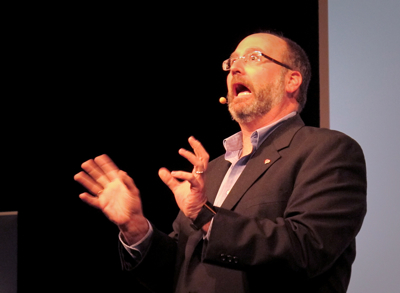
A few weeks ago I did the Keynote at NELA and it was received very well, including a very thoughtful blog post by Agnostic, Maybe. I needed to create shorter more pithy version for the iSchools webpage, and so edited it down from an hour to 25 minutes. I thought it might be useful to others, so here it is:

if you want the longer version with more jokes, ums, and New England references you can find it here. Also, due to popular demand I should be able to post a transcript of the original this week.

Lankes Appointed as Dean’s Scholar for the New Librarianship

From Dean Liz Liddy, Syracuse University iSchool:

“I am pleased to announce that in recognition of Dave Lankes’ outstanding contributions to the evolving field of Library Science, I have appointed him to the well-deserved position of Dean’s Scholar for the New Librarianship. Through his writing and speaking about what it means to be a librarian in this day & age, Dave has increased the scope and potential of the field, and has even further improved our very positive reputation in ways that are difficult to measure. Please join me in congratulating Dave for this well-deserved honor.”

Remembering Joe Ryan

SCAN0002
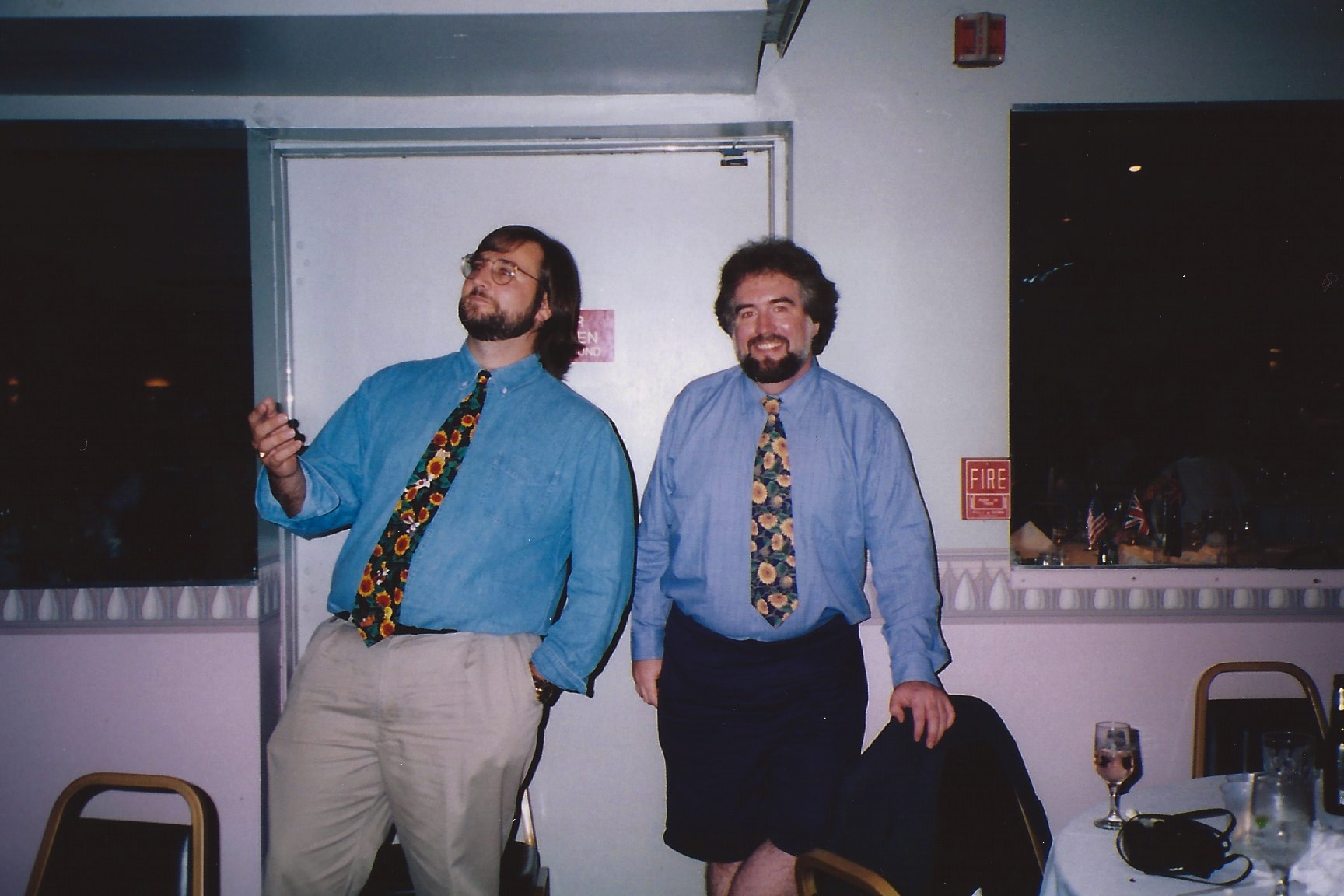
I learned yesterday that a close friend during my Ph.D. program had passed away. Joe Ryan and I were doctoral students back in the nineties and I owe him so much. He took a kid fresh out of an undergraduate program, and taught me how to survive in a Ph.D. program. He taught me how to write (he published my first vita hit – a book review in Internet Research), how to be edited (“I edit the words, not the person), he even gave me fantastic travel advice (“All you will ever see of the world is the inside of hotel rooms, taxis, and airports if you don’t force yourself to walk around”). He even helped me buy my first suit for a gig in DC. He was always there with advice. He always had something useful to say.
He also did a fair bit of inspiring my passion in libraries as a former librarian himself. He would tell the stories of packing books into the car of his trunk to circulate to the local neighborhoods.

Some of you may remember Joe and his work on Internet policy, the NREN (National Research and Education Network – true story we co-coached a school wide softball team for the School of Information Studies called the NRUNs), and his close work with Chuck McClure on library evaluation and broadband adoption.

After I started my job as a faculty member Joe and I didn’t talk much, and for the past few years not at all. It is unfortunate that only with his death do the “what’s going on with…” and the “I should call…” lines take on real urgency in the form of regret. I will miss Joe, and now I will always miss the opportunity to re-engage with him. I owe Joe a lot, and his passing is a very sad day.

Lankes to Participate in Salzburg Global Seminar

Salz
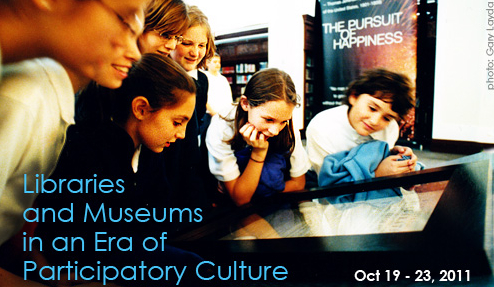
I have been invited to be a part of the Salzburg Global Seminar “Libraries and Museums in an Era of Participatory Culture” which will be held in Salzburg, Austria in October. The session is being convened jointly by the Salzburg Global Seminar (SGS) and the Institute of Museum and Library Services (IMLS).
From the seminar description:

Abstract

As key stewards of our culture and heritage, libraries and museums have traditionally enjoyed, and to a great extent still do enjoy, a unique role and special responsibility within societies around the world. But as economic disruptions and rapid technological innovation have brought about dramatic societal changes, libraries and museums, too, are being forced to revisit and rethink their own roles and responsibilities within these changing societies. The 21st century indeed poses perplexing challenges, but at the same time offers intriguing new opportunities for libraries and museums. It is a critical moment for leaders within libraries and museums to reflect creatively and strategically about the role and place of their institutions in an era of participatory culture and to recognize and seize the opportunity for reorientation and reinvention.

Building on the Institute of Museum and Library Services (IMLS) initiative The Future of Museums and Libraries as well as on past museum and library sessions convened by the Salzburg Global Seminar, this session will bring together approximately fifty leaders, advocates and constituents of libraries and museums, cultural and educational policymakers, cultural sector researchers, representatives of library and museum education programs, technology experts, sociologists, journalists, and library and museum association representatives to debate the changing roles and responsibilities of libraries and museums in their societies. The participants will consider the following key areas: societal changes that are shaping the future of museums and libraries; collaboration; education and training; communication and technology; sustainability; value and values. Together, the participants will develop a set of recommendations for libraries and museums to meet the new challenges posed to them in this era of participatory culture. The recommendations, in turn, will be shared with the larger library and museum community worldwide.

This session is being convened in partnership with the Institute of Museum and Library Services in Washington, D.C.

SALZBURG GLOBAL SEMINAR

The Salzburg Global Seminar is a unique international institution focused on global change—a place dedicated to candid dialogue, fresh thinking, and the search for innovative but practical solutions. Founded in 1947, it challenges current and future leaders to develop creative ideas for solving global problems, and has brought more than 25,000 participants from 150 countries and regions to take part in its programs. The Salzburg Global Seminar convenes imaginative thinkers from different cultures and institutions, organizes problem-focused initiatives, supports leadership development, and engages opinion-makers through active communication networks, all in partnership with leading institutions from around the world and across different sectors of society. To learn more about the Seminar, please visit www.salzburgglobal.org

THE INSTITUTE OF MUSEUM AND LIBRARY SERVICES

The U.S. federal Institute of Museum and Library Services is the primary source of governmental support for the nation’s 123,000 libraries and 17,500 museums. The Institute’s mission is to create strong libraries and museums that connect people to information and ideas. The Institute works at the national and international levels and in coordination with state and local organizations to sustain heritage, culture, and knowledge; enhance learning and innovation; and support professional development. To learn more about the Institute, please visit www.imls.gov.

MacArthur Foundation funds ‘Reference Extract’ to draw on librarians’ expertise and add credibility to Web search experience

DUBLIN, Ohio, USA, 6 January 2011—The John D. and Catherine T. MacArthur Foundation has awarded $350,000 to fund researchers and developers from OCLC, the information schools of Syracuse University and the University of Washington and Zepheira LLC to continue work creating a more credible Web search experience based on the unique expertise, services and input from librarians worldwide.

The goal of the Reference Extract project is to make it easy to find credible information in the digital age. Researchers and developers are expected to have initial practical analysis and models of this “credibility engine” to share with the community in early 2011. Details of this work can be found through the Reference Extract home page at http://www.referencextract.org/.

Reference Extract is designed to capture Web site URLs and references that librarians and other experts use in answering questions. This information, including data used to determine the most credible resources, is harvested, processed and then made available through a variety of Web environments. For example, Reference Extract will use a Web-based architecture that allows information to be embedded into existing and new Web sites and applications.

The Reference Extract system links the questions of users to Web sites referenced by librarians and other experts as well as to the resources used to answer the questions. This approach varies from traditional Web search engines that represent only a single type of relationship—a Web page that points to another Web page. Reference Extract adds another relationship—linking to resources that librarians and experts point to and use.

“The best search engines are great for basic search, but sometimes the Web site results lack credibility in terms of trust, accuracy and reliability. So, who can help? Librarians,” said Dr. Mike Eisenberg, Dean Emeritus and Professor at the Information School of the University of Washington and a lead on the project. “If a librarian recommends a Web site, you can be pretty sure that it’s credible. Reference Extract will take hundreds of thousands of librarian recommendations and use them to help indicate to end users which site is credible. We’re extremely fortunate to have the MacArthur Foundation’s support bringing together the right team to start to actively develop and showcase this work.”

Zepheira, a professional services organization with extensive expertise in Semantic Web standards, Linked Data principles, Web architecture and collaborative solutions, is working with OCLC, Syracuse and Washington to create the piece of Internet architecture that will make it easy to embed credible information in Web-based experiences.

“The computational machinery behind the Web is today somewhat like a small child in a shopping mall; it has no mechanism for distinguishing what sources of information to trust,” said Eric Miller, President of Zepheira. “Building a general architecture that makes it easy to re-use credible information on the Web is one thing; populating this architecture with trustworthy information is another. Building upon librarians’ expertise and existing virtual reference service offerings is a powerful way of offering new means for accessing credible information in a range of different online experiences.”

Reference Extract leaders say the project will work best if the entire library community gets involved to create a Web-scale effort to support this cooperative innovation. QuestionPoint, the OCLC virtual reference service supported by a global network of cooperating libraries and an infrastructure of software tools and communications, offers a starting point for building the service. QuestionPoint has more than 6 million reference transactions collected in a central knowledge resource and more than 10,000 librarians worldwide participating collaboratively to test the principles and impact of such a dynamic utility.

“The only way this will work is by making a project of an entire community,” said Dr. R. David Lankes, Director of the Information Institute of Syracuse and Professor at Syracuse University’s School of Information Studies. “Web searchers get to tap into the incredible skill and knowledge of the library community, while librarians will be able to serve users on a whole new scale.”

In November 2008, the planning and research phase of Reference Extract began through a $100,000 grant from the MacArthur Foundation. The MacArthur Foundation has continued to fund the project for the pilot development phase. Reference Extract work follows on previous credibility work supported by the MacArthur Foundation, most notably the Credibility Commons.

The John D. and Catherine T. MacArthur Foundation
The MacArthur Foundation supports creative people and effective institutions committed to building a more just, verdant, and peaceful world. In addition to selecting the MacArthur Fellows, the Foundation works to defend human rights, advance global conservation and security, make cities better places, and understand how technology is affecting children and society. More information is available at www.macfound.org.

The School of Information Studies at Syracuse University
The School of Information Studies is The Original Information School in the nation. It is a leading center for innovative programs in information policy, information behavior, information management, information systems, information technology and information services. The nationally ranked school (U.S. News and World Report) has professional degree programs at the undergraduate and master’s levels and a research degree at the doctoral level. The school offers its master’s programs in campus and distance learning formats. For more information, visit www.ischool.syr.edu/about/.

The University of Washington Information School
Each year, the world creates more than 161 exabytes of new information—enough to fill 2 billion 80GB iPods. So much information can be overwhelming. Rigorous study of the users and uses of information conducted at the UW Information School helps answer important questions. By tackling key social and technical problems in the information field, the UW iSchool has become an important link between users of information and designers of information systems, connecting society with the information it needs. For more information, visit www.ischool.washington.edu/.

OCLC
Founded in 1967, OCLC is a nonprofit, membership, computer library service and research organization dedicated to the public purposes of furthering access to the world’s information and reducing library costs. More than 72,000 libraries in 170 countries have used OCLC services to locate, acquire, catalog, lend, preserve and manage library materials. Researchers, students, faculty, scholars, professional librarians and other information seekers use OCLC services to obtain bibliographic, abstract and full-text information when and where they need it. OCLC and its member libraries cooperatively produce and maintain WorldCat, the world’s largest online database for discovery of library resources. Search WorldCat on the Web at www.worldcat.org. For more information, visit the OCLC Web site.

Zepheira
Zepheira is a US-based professional services firm comprising leaders in web architecture, semantic web standards, and linked data principles used to achieve integration of data stored in multiple systems and formats across organizations. Zepheira experts have a long history of leading Internet standards initiatives and delivering solutions founded in open standards and open source software. These solutions apply social computing principles and focus on allowing communities to collaborate around the analysis and curation of their data. Zepheira’s solutions benefit a broad range of industries including memory organizations, manufacturing, financial services, medical research and life sciences. The company is privately held and has offices in Virginia, Ohio and Colorado. For more information, visit: http://zepheira.com.
Faculty Votes to Promote Lankes to Full Professor

Today the faculty of the School of Information Studies voted to promote me to full professor. THe case now goes to the Senate for confirmation (but the faculty vote is the big hurdle). I would like to thank those from the community who supported me in this process. I would also like to take this opportunity to apologize for all the things I let slip in the process…I’m on it.

Promotion

Hi blog folks. I’m going up for promotion this year. If my work has been useful to you in practice, I ask you to respond to the below letter.

Hello,

In December 2, Professors Dave Lankes will be considered for promotion to full professor. This is one of the most important decisions we make with respect to faculty and so we sincerely request that you, as a student of Professor Lankes, help our deliberations by submitting an evaluation of him to be added to the body of evidence being collected for his case.

You are asked to comment on Professor Lankes’s teaching and advising and his contributions to the School and the profession. Please specify in what context you interacted with him (as advisor, coursework, independent study, research, and so on).

Please note that Professor Lankes has waived his right of access to the responses you make. This means that your letter will be held in the strictest confidence and that only members of the evaluation committee will see it.

In order to be eligible for consideration, your letter must reach us by November 28, 2010. The letter must be signed and in a sealed envelope. Otherwise, the evaluation committee will not see it. You may email me a copy and follow by a signed copy if you want to get the letter in the last minute. The letters may be left for me at faculty services in 245 Hinds Hall or sent to the address below.

We thank you for your contribution to this process. If you have any questions, please feel free to contact me.

Sincerely,

Jian Qin, Ph.D.
Associate Professor
Chair, Personnel Committee
School of Information Studies
Syracuse University
311 Hinds Hall
Syracuse, NY 13244
http://eslib.ischool.syr.edu/

Come to the Syracuse LIS Open House

Know someone interested in library science? The iSchool is having an Open House for anyone interested in any aspect of library science. Help us spread the word!

Overview and Information Fair

Thursday November 11, 2010
5:15-7:30 p.m.

Discover the exciting opportunities awaiting you in the ever-evolving library profession. Talk to students, faculty, and alumni about their experiences and what opportunities await you in this ever-changing field. Learn about online learning options and WISE, the Library and Information Science and School Media programs, Digital Libraries, eScience, Cultural Heritage Preservation, career opportunities, and Admissions, Financial Aid and Scholarships.

Meet the Faculty

Friday November 12, 2010
9:00 a.m. – 12:00 p.m.

Participatory librarianship, eScience, information organization, innovation, and motivation—join us to hear our faculty members share how they turned their passion into their profession.

RSVP and learn more at http://ischool.syr.edu/OpenHouse.