Last week I had the absolute honor of presenting in Sao Paulo Brazil I spoke at FESPSP 85th anniversary of their library science program and at the 23º Seminário Nacional de Bibliotecas Universitárias (23rd National Seminar of University Libraries). I met so many dedicated and innovative librarians working to make Brazil better through librarianship. The programs, scholarship, and initiatives were world-class. The students brilliant. On a personal note, I cannot tell you how meaningful it is to see one’s work being put into action and having a real impact.
I would like to thank everyone I had a chance to meet and learn from. Special thanks to Jorge Prado, Adriana Ferrari, and Adriana Souza.
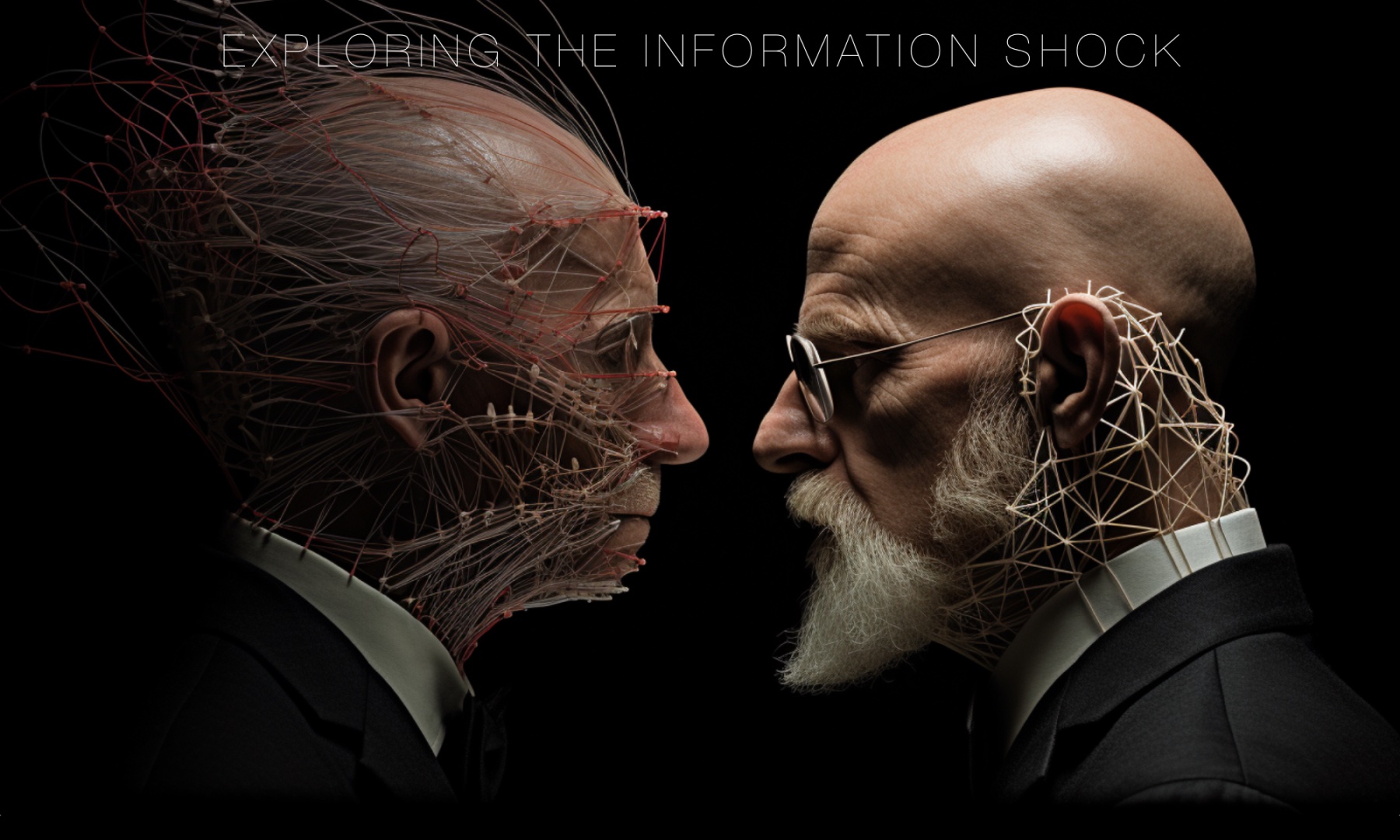
As AI reshapes information access and discovery, libraries face critical choices about technology, equity, and community trust.
Join us for The AI Moment in Libraries: What It Means for Our Profession, a virtual panel exploring how libraries can navigate AI implementation while staying true to core values of access, privacy, and service to all communities.
Panelists:
Beth Patin (Moderator) – Associate Professor, School of Information Studies, Syracuse University
Sanda Erdelez – Dean, School of Library and Information Science, Simmons University
Leo Lo – University Librarian and Dean of Libraries, University of Virginia
R. David Lankes – Virginia and Charles Bowden Professor of Librarianship, School of Information Science, University of Texas at Austin
Jeff Saltz – Associate Professor, School of Information Studies, Syracuse University
When: Tuesday, November 11, 12:00–1:00 PM Eastern Time
Where: Virtual via Zoom
This panel will feature an honest conversation about preparing librarians, serving patrons, and leading with ethics in an AI-integrated future.
I’m honored to give the inaugural President’s Lecture to ASIS&T September 19 at 10 am Eastern Time.
From the ASIS&T site:
ASIS&T is delighted to announce the launch of the Annual ASIS&T President’s Lecture. The Lecture will be open to the public and delivered via Zoom to ensure that all who wish to may attend.
The inaugural ASIS&T President’s Lecture will take place September 19 at 10 am Eastern Time (find your time here) and be presented by R. David Lankes, Virginia and Charles Bowden Professor of Librarianship at the University of Texas at Austin.
With the generous support of the Dutch Library Association (thank you Klaas Gravestejin), I am headed to the Netherlands for a few weeks. There I’ll be spreading the word on the importance of centering librarianship on the communities we serve.
I am so looking forward to meeting with my Netherland colleagues. The country has long been a center of innovative librarianship. From Delft to Utrecht to Amsterdam to Tilburg to the amazing National Library of the Netherlands it is honestly more pilgrimage than a trip. I even get to catch up with folks like Irene Harmsen and the cohort of Community Librarians.
I am so looking forward to seeing colleagues and making new connections.
My current public event schedule:
29th May
Innovatie Dag Prodent Fabriek Amersfoort
4th June
Visit Dutch StoryHouse Cultura & Zo Nootdorp
6th June
National Members Netherlands Library Association for PL at Beeld and Geluid Hilversum
I’ll be posting slides and updates (and probably pictures of canals) here.
A special thank you to Erik Boekesteijn of the National Library for making this happen. Honestly, hanging with him is the real highlight of the trip.
Join us for a workshop where we’ll be delving into the crucial topic of AI literacy. Together, we’ll be designing an educational program for high school students to help them learn about the future of AI and its impact on their lives and careers. Topics include algorithmic bias, generative AI, disinformation, and self-driving cars. School librarians attending the TLA 2023 Conference are invited to join us for an exciting and enriching experience!
This workshop is funded through a grant from the Institute of Museum and Library Services for our project, “Training Future Faculty in Library, AI, and Data Driven Education and Research (LADDER).” The goal of this project is to prepare future LIS faculty who have hybrid expertise in leveraging libraries and AI and data science to benefit libraries. LADDER Fellows conduct collaborative research with school, academic, and public librarians as well as the principal investigators, Soo Young Rieh, Ken Fleischmann, and David Lankes.
Publisher’s Weekly just hosted another great Book SHow. As part of it Andrew Albanese organizes a track around libraries, and this year was a great set of panels and speakers. I was part of a panel on Library Leadership below (as well as an interview on my book Forged in War).
Hi, my name is David Lankes. When I wrote the Atlas of New Librarianship 11 years ago my goal was to start a conversation about librarians, libraries, and their role in helping communities of all sorts make better decisions and help community members find meaning in their lives. Over the past decade that conversation has spread across the globe. It has also grown deeper with passionate new voices adding new perspectives, expertise, and challenges.
I am so happy to announce a symposia series on New Librarianship.
Ten years ago MIT Press published The Atlas of New Librarianship. We are taking the opportunity of its 10th anniversary to explore some of the key issues in librarianship that have evolved and emerged since 2011 in a series of online symposia in October and November 2021. We would like to invite you to be a part.
The symposia series is sponsored by MIT Press, the University of South Carolina, the International Federation of Library Associations and Institutions, the British Library, KB National Library of the Netherlands, the U.S. Institute of Museum and Library Services, Gigabit Libraries Network, URFIST de Bordeaux, Enssib, and the Black Caucus of the American Library Association. We also expect more international organizations to join as sponsors shortly.
Symposia sessions will be streamed live, free of charge, and with efforts made to meet accessibility needs. Detailed descriptions for each topical area are below.
Accepted abstracts will be presented during a symposium and published on the University of South Carolina ScholarOne digital platform. Three abstracts for each symposium will be invited for development into white papers and awarded $2500 stipends. In addition, selected presentations will be developed into commissioned essays to be included in the Atlas of New Librarianship. Submissions from library practitioners and early career faculty are highly encouraged.
Each symposium will focus on concepts that guide library practice and development, rather than focusing on skills or specific functions tied to a given institution. Participants will be encouraged to seek broad concepts and theory that ultimately determine how librarianship is defined in and outside of the context of a library, as well as beyond sectors (public, academic, school, etc.). These symposia seek the ideas that will guide the field over the next decade instead of the latest trends or services.
Abstract submissions should address one of the four following core topics:
Symposium 1: Equity, Diversity, and Inclusion: The vital need for diversity in librarianship stems from twin beliefs in the inherent value and dignity of all people and in the fact that the best knowledge is derived from the richest variety of sources. How can this be expressed as a core value of librarianship and what are its implications for the institutions librarians build and maintain? How can we address institutional racism, biases, discrimination, and inaccessibility in library institutions, education, and practice internationally? How might we integrate principles of inclusion and universal design?
Symposium 2: Post-Neutrality Librarianship: Librarians cannot be unbiased neutral information professionals and passionate advocates for better communities. To seek an improved society calls for a vision of what “improved” means. How can librarians reconcile the reality of making service decisions in a context of limited resources with a mandate to serve the whole community?
Symposium 3: International Influences: Concepts of diversity, of service, and of librarianship itself are strongly influenced by local contexts. The idea that the work of librarians looks the same in Kenya, Norway, China, and the United States is founded on the strained concept that universal structures serve all. What in librarianship transcends national boundaries, what varies, and what is the process that connects the two?
Symposium 4: A New Normal Agenda in a COVID-Affected World: The COVID pandemic has put in sharp contrast the role of libraries in communities, and made clear how what was once considered normal, must never be normalized again. Librarians must fight for universal broadband, better workforce development, and expand democratic conversations, to ensure the wellbeing of communities and understand their roles in a crisis. What does the new normal agenda for librarianship look like?
Paper Abstract Submissions:
Abstracts for papers to be presented during a symposium should discuss, analyze, and critique critical ideas, theories, and concepts addressed within the chosen symposium topic. Submissions will be evaluated on quality of content; theoretical, conceptual, or practical significance; relevance for practice; originality; and clarity. The maximum length for an abstract, including references, is 500 words. Appendices should not be included. No author names should be listed in the abstract submitted for review.
Creative Format Contribution Proposals:
In addition to the call for paper abstracts, we invite multimedia contributions in visual, audio, audiovisual, or hybrid formats. Contributions should include a sample of work and a contributor statement and engage with critical ideas, theories, and concepts addressed within the chosen symposium topic. Submissions will be evaluated for quality of content; theoretical, conceptual, or practical significance; relevance for practice; and creativity.
Editorial Board Review: Submissions will be refereed by an editorial board assigned to each symposium area. Please see the “About” page for Editorial Board Member information.
Important Dates
June 30, 2021: Abstract submissions due by 11:59 PM EST
August 1, 2021: Notification of abstract and creative format proposal acceptance; notification of abstracts selected for white paper commissions
October 28, 2021: Equity, Diversity, and Inclusion Symposium
November 4, 2021: Post-Neutrality Librarianship Symposium
November 11, 2021: International Influences Symposium
November 18, 2021: A New Normal Agenda in a COVID-Affected World Symposium
February 28, 2022: Publication submissions due by 11:59 PM EST (GMT -5)
July 2022: Processing of materials, copyediting of submissions, and preparation of introductory materials, including audio introductions of selected content, will be completed and published on the University of South Carolina ScholarOne site.
End of 2022 (approximate): Target publication date for The Atlas of New Librarianship,Second Edition
I sent the following message this morning to the faculty, staff, students, and alumni of the iSchool here at South Carolina.
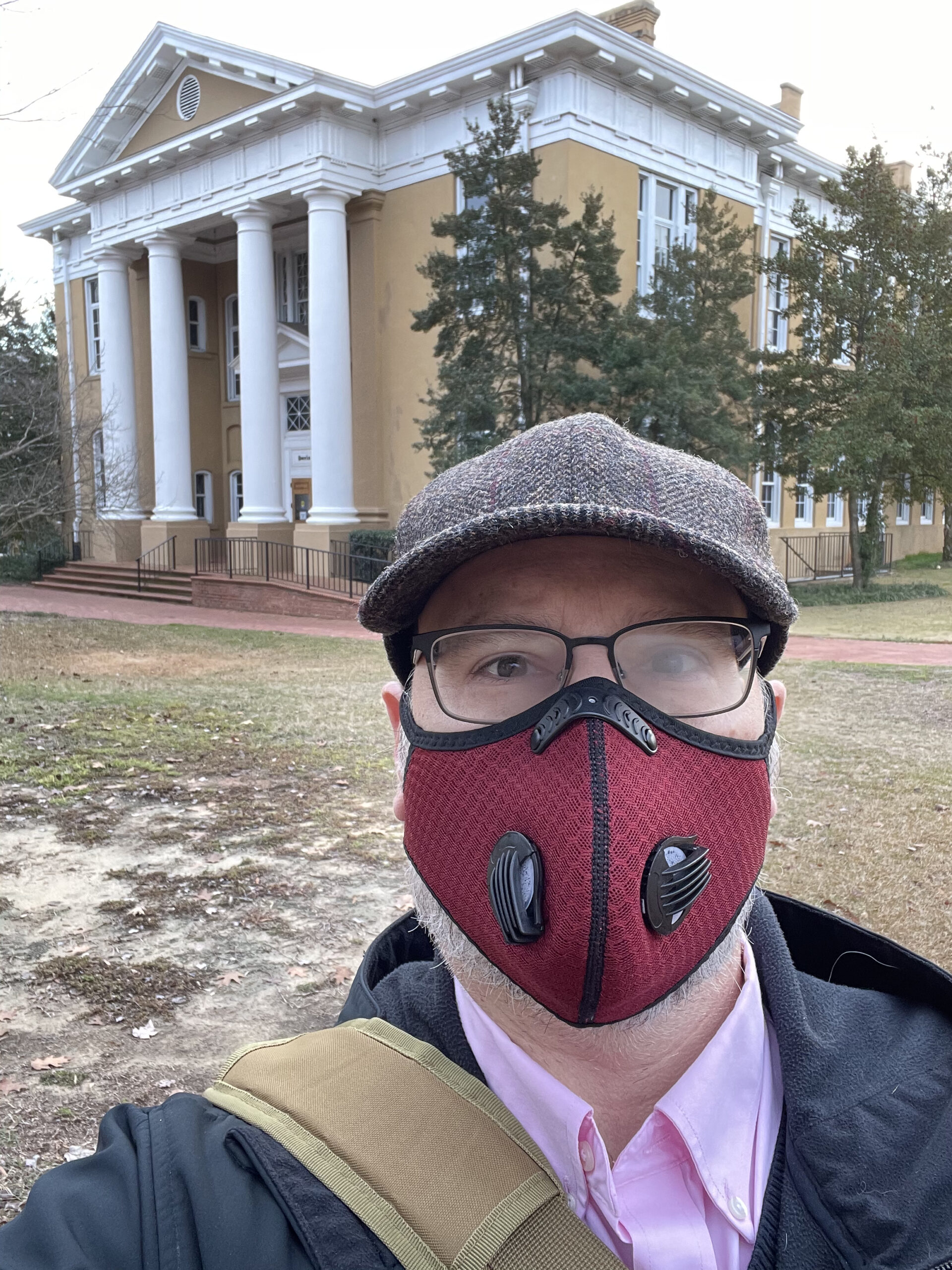
I am writing you from my office in Davis Hall. It is the morning of January 11 – the first day of classes for the Spring ’21 semester. Right now, I’m the only one here, a result of the reality around the pandemic. This semester we have no in person classes – though we will be setting up a regular in-person undergraduate joint study session soon. This semester we continue to adapt to a global pandemic.
Davis Hall Ready for the Semester
I also have to admit, that after the events of January 6 in the U.S. Capitol Building, I was not anxious to have a government building unattended. It is frankly horrifying that in classes where we are studying the global realities of the pandemic, the historic Black Lives Matter protests for racial justice, and the effects of the economic realities of the pandemic on communities, we must add armed insurrection. And yet, here we are. Our faculty, staff, students, and alumni are suffering and attempting to come to terms with a world that seems out of control.
In college I had a professor who taught an evening class. He said how he always loved teaching evening courses in the Spring because they would begin the semester in darkness, and by the end light would fill the classroom as summer approached. We too can see ourselves at the beginning of this semester in the darkness of winter, and we are seeking out the light. However, it won’t be a matter of simply waiting for the Earth to turn on its axis, but rather through action. We bring about the light by embracing our mission at the iSchool: to bring meaning and justice to communities through information and knowledge.
We do this through our teaching. We share the skills and foundations for how organizations use information resources in serving people in ethical ways. We teach librarians, web designers, business analysts, future faculty, and future information professionals. This teaching, really a partnership of learning, continues to mesh skills with perspective and highlighting all of our commitment to a more just and equitable society.
We do this through research, discovering new aspects of the human condition in a world of connection, data, and information resources.
We do this in our K-12 classrooms as school librarians empowering our youth with critical literacy skills and a sense of passion for continuous learning.
We do this in public institutions – public libraries, government departments, and as citizens engaging in the democratic process – by ensuring transparency, by building knowledge platforms empowering citizens to find meaning, and by constantly refreshing, reifying, and reinvesting in democracy itself. Democracy, as we know, doesn’t live in documents and laws, but in the common commitment of the governed to seek out the community good.
We do this in universities and archives. We not only preserve the past, but ensure that a living past is not forgotten and informs our future. We provide vital support to scholars and faculty taking on the pandemic, on issues of systemic racism, and inventing new technologies.
We do this in business, academia, schools, colleges, government, and in our neighborhoods.
This past week, and indeed this past year, have seen dark times. They are getting darker. COVID cases are rising, innocent Black citizens still face unequal justice, our fellow Americans and my fellow citizens of the world are losing jobs and the security of a home. It is easy, and even understandable, that in the face of overwhelming challenges we feel lost, or hopeless, or alone. You are not alone. For 50 years this school has sought to build and empower a community – a network of professionals dedicated to bringing light to the darkness of ignorance.
Through collections, and computers, and social media, and data mining, we have been part of a half century preparation for just this time. We send out a kickass chicken into the most under-resourced schools of the state to encourage literacy. We manage libraries – engine of innovation and service in San Francisco, Vermont, Santa Barbara, Charleston, Columbia, Lexington, Oxford and throughout the world, and we will continue to do so. We have alumni in DC and insurance agencies, state government, and startups that are part of a network committed to a better tomorrow. We are woven throughout the fabric of the nation, and now is the time for us to pull together and bring the light.
If you need support, encouragement, or simply someone to listen, please reach out. And if you have the strength, reach out to your fellow students, your fellow alumni, and show them we are together.
I know we will have a strong and successful semester. That, however, is not enough. We must ensure that we have a strong and successful nation. Let us bring the light.
One of my favorite parts of the school year is the hooding we do for newly minted MLIS grads in the spring and fall. I’ve gotten into a tradition of giving one last little lecture at each. I created a video of this year’s for those who couldn’t make it, and am sharing it widely.
First the video, then the script.
Congratulations on this great step into your future… we just have time for one last little lecture. Because this moment is no doubt not how you imagined it. A zoom’ed hooding was not a normal thing just a year ago.
And that’s what I’d like to talk about – what is normal. Because like it or not, it is a question that will be at the center of your job for the next several years. In your classes you have been taught skills to organize information, to find information, to use information to help people find meaning in their lives and for communities to make smarter decisions. All of those skills, however, are ultimately about creating normality. How the world organizes itself, the data it collects about its operations and the choices it makes based on that data is what we come to see as normal.
Things that we take as par for the course today – opinion polls, economic numbers, credit scores – are information creations of the past century. And we see the often grim new normal of data and collected information being formed around us today: positivity rates, mortality numbers, public acceptance of disinformation. This information can be used to enlighten such as exposing the outsized effect of the pandemic on communities of color. How information is organized and disseminated can also be used to blind: attacks on our very democracy masked as benign legal maneuvers.
Make no mistake, what is and will be normal, is a choice. Not just a choice as to what people expect or accept, but in what you will do and advocate for. It is the librarians, information professionals, educators, data analysts, and researchers that you are now that will shape the new normal. It is your unique combination of skills and ethical center that must fight disinformation and reweave the connective tissue of our communities and our very democracy.
You will do this person by person, neighbor by neighbor, student by student. You will do this by never accepting that people – children, mothers, brothers, flawed and glorious all – can be reduced to a stream of data or flattened to consumers. You will do this through difficult conversations in person and in print and in Zoom. Conversations on race, on ideology, on the very nature of truth. You will do this not by being neutral, but by being transparent and an example of knowledge informed by data and information, but more importantly by your humanity.
Today we celebrate – tomorrow we begin the work of forging a new normal where Black Lives Matter. Where the fate of a student in rural South Carolina is never determined by the zip code of their birth. Where the access to life saving medical treatment is not tied to the size of a bank account, and where borders never limit the span of our imagination or friendship.
This is your last lesson then. The true value of your degree, and your education is never determined by the diploma you receive, but by the communities you improve.